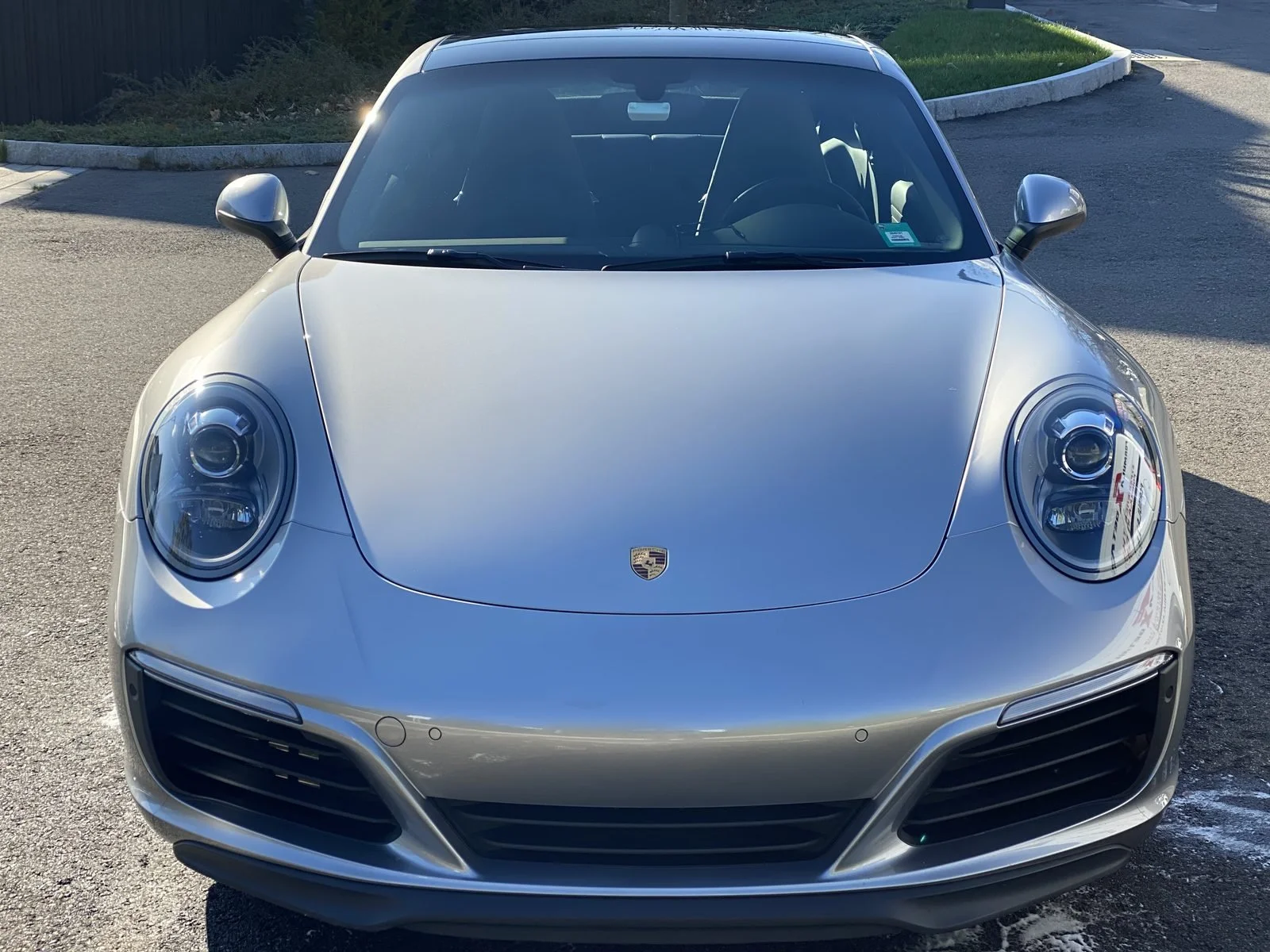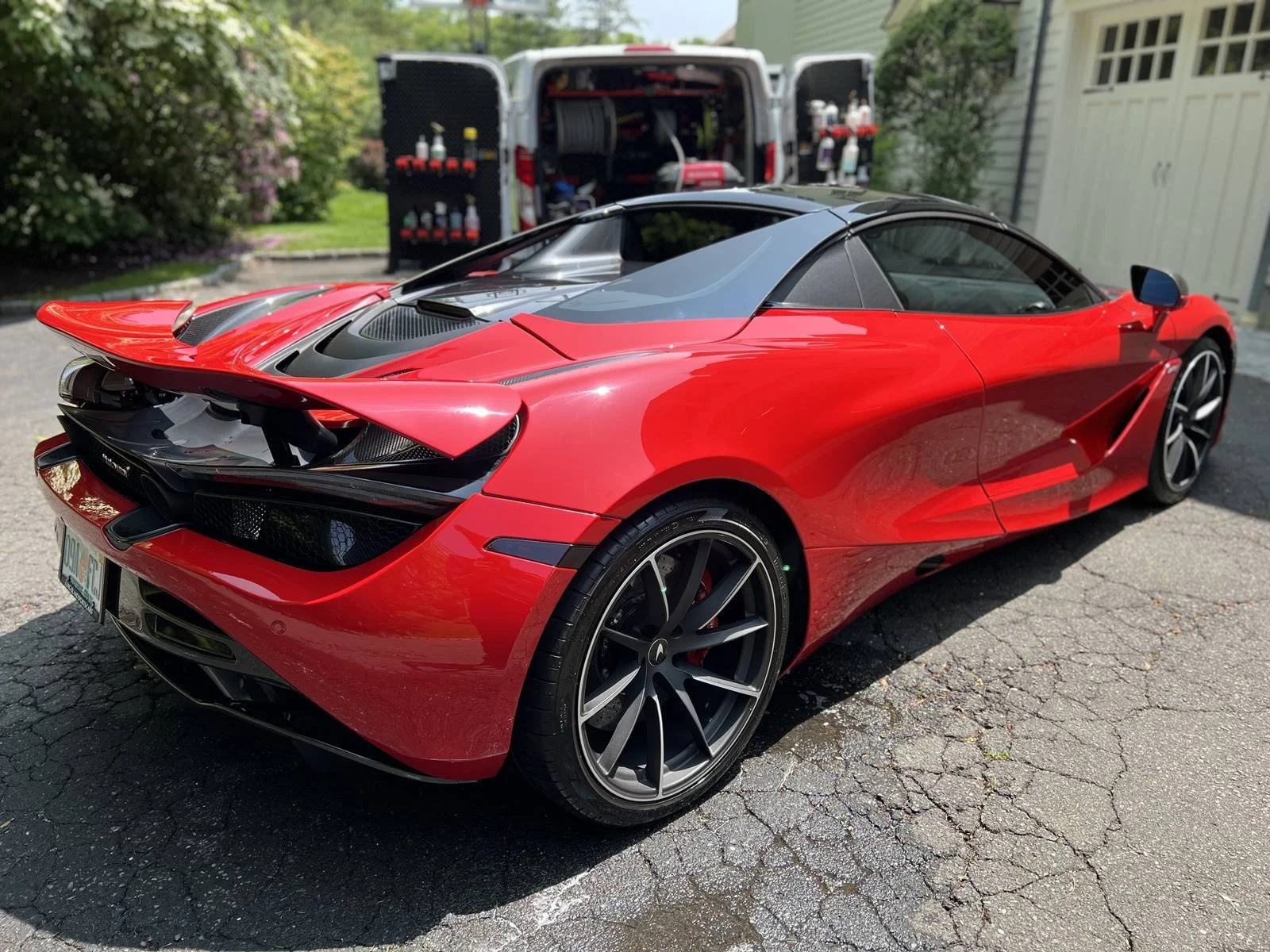
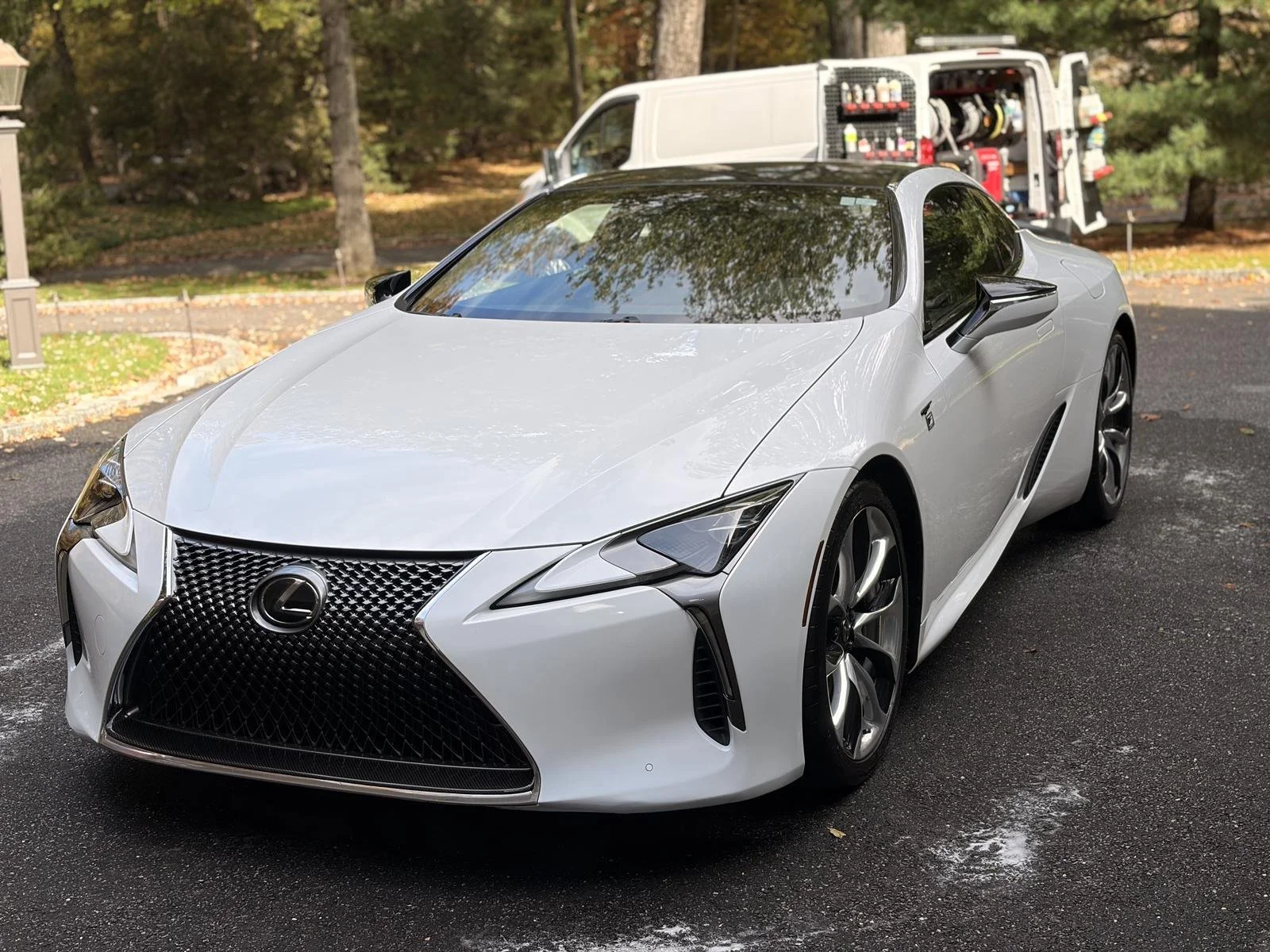
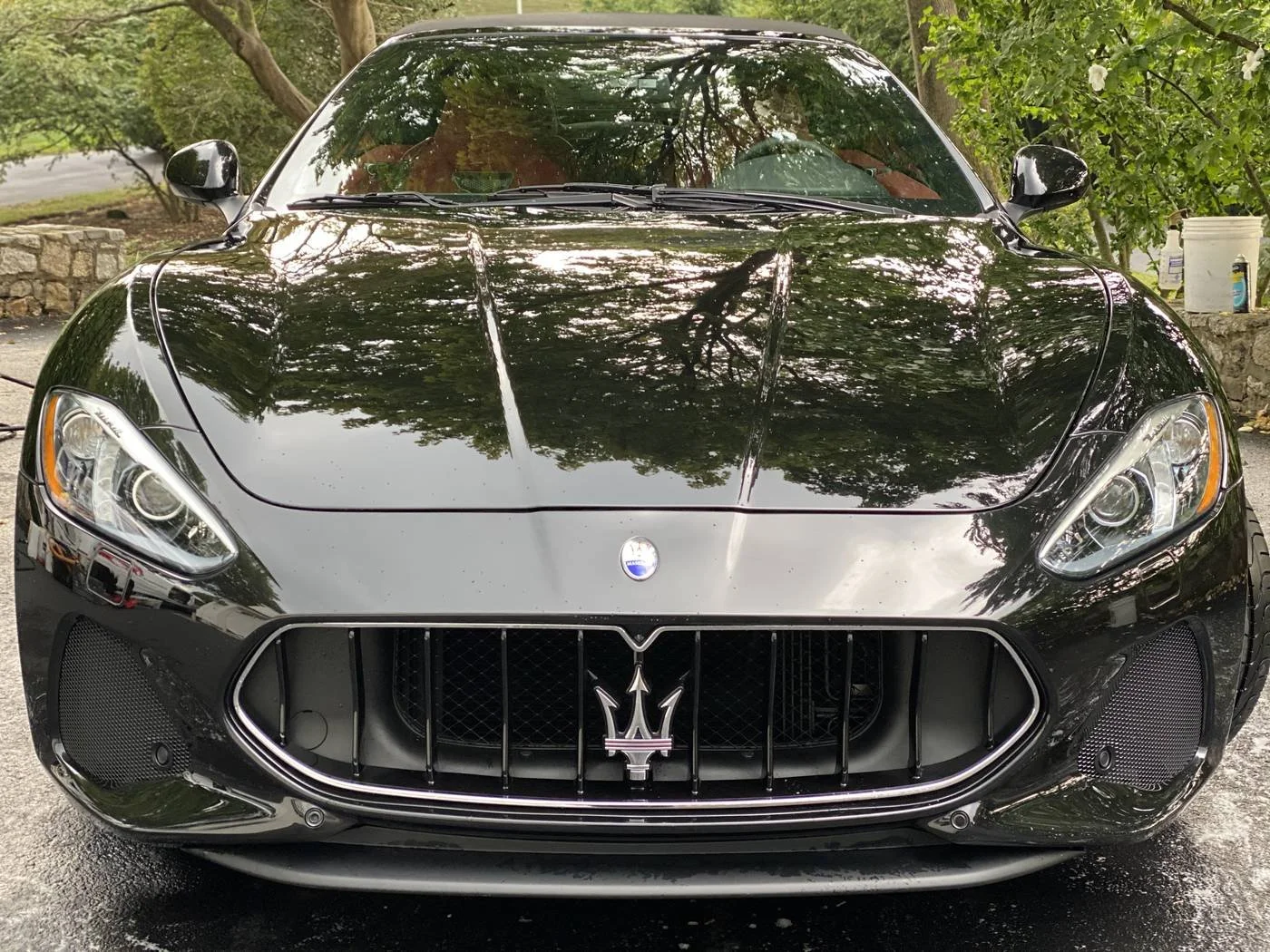
Formula X Mobile Auto Detailing & Ceramic Coating · Ceramic Coating Cost Guide
“How much is a ceramic coating?” is usually the first question Connecticut drivers ask, and it’s the hardest one to answer over the phone. The coating itself is only part of the job. Most of the price comes from what has to happen before the coating goes on: washing, decontaminating, and often machine polishing paint that has spent a few winters on salted roads, under shedding trees, or in a shoreline driveway. How many layers go on, which surfaces get coated, how big the vehicle is, and what warranty and upkeep come with it all matter too. This guide explains what drives the cost, how Formula X’s Ceramic Pro packages are built, how they differ from its published detailing packages, what a fair quote should spell out, and the red flags to watch for when comparing installers in Fairfield County. Formula X Mobile Auto Detailing & Ceramic Coating is based at 48 Union St, Stamford, CT 06906, and can be reached at (203) 945-9454.
How much does ceramic coating cost in Connecticut?
There’s no honest single number for ceramic coating in Connecticut, because the price depends mostly on the condition of your paint and how much preparation it needs before the coating goes on. The other big factors are the size of the vehicle, the coating package and number of layers, which surfaces are coated (paint, wheels, glass, trim), and the warranty and annual service that come with it. Formula X quotes every ceramic coating after inspecting the vehicle. Its only published prices are for detailing packages: Gold from $495+, Silver from $395+, and Bronze Interior or Bronze Exterior from $295+, with scratches extra. If a price is quoted before anyone has seen your paint, ask what it includes and what happens if the paint needs more work than expected.
This guide doesn’t list dollar figures for coatings, for Ceramic Pro tiers, or for other shops. Prices change, every vehicle is different, and an average from somewhere else won’t tell you what your own car will cost. What it does give you is the list of things that move the price, so you can read any quote, from Formula X or anyone else, and know what you’re paying for.
Where the details come from: Package contents come from the Ceramic Pro and detailing package cards on Formula X’s website. Warranty and aftercare details come from Ceramic Pro’s own published coating warranty document and aftercare page. Those are the manufacturer’s terms, not promises from Formula X.
Why There’s No Single Price for Ceramic Coating
Quick answer: A ceramic coating locks in whatever is underneath it. Two cars of the same model can need very different amounts of washing, decontamination, and polishing before they’re ready, and that labor is usually the largest part of the bill. A fair price can only be set once someone has looked at the paint under good light.
Think of a ceramic coating as a clear, hard, slick layer that bonds to your car’s clear coat. Once it cures, it makes the paint easier to wash, helps water and grime sheet off, and adds chemical resistance against things like bird droppings and road film. What it doesn’t do is hide defects. Ceramic Pro’s own warranty document puts it plainly: “Any coating will amplify any pre-existing damage on the substrate,” and it strongly recommends that vehicles over three months old get a machine polish by the installer first.
That one sentence explains most of the price differences you’ll see. A brand-new car straight from the dealer may need only a careful wash, iron removal, and a light clay before coating. A five-year-old SUV that has been through automatic car washes and Connecticut winters may need hours of machine polishing to remove swirls, water spots, and haze before it’s worth coating at all. The coating bottle costs about the same in both cases. The labor doesn’t.
Paint condition
Swirls, scratches, water spots, oxidation, and embedded contamination all need attention before coating. More defects mean more hours of prep.
Vehicle size
A three-row SUV or full-size pickup has far more painted surface to wash, decontaminate, polish, and coat than a compact sedan.
Package and layers
More layers, more coated surfaces, and longer warranty terms take more product and more time, and usually cost more.
Goals and timeline
A lease you’re returning in two years and a car you plan to keep for ten don’t need the same level of prep or the same package.
So when you ask a detailer for a price and get “it depends,” that isn’t necessarily evasion. It may be the most honest answer available until the car has been seen. What you should expect is a clear explanation of what it depends on, and a written quote once the inspection is done.
Be wary of a flat price that ignores condition. If one price covers every car regardless of paint condition, either the prep is minimal, or the extra work shows up later as an add-on. Ask what prep is included and what costs extra.
What You’re Actually Paying for in a Ceramic Coating
Quick answer: A coating price covers labor for washing and decontamination, any paint correction, surface prep to remove polishing oils, the coating product itself for each layer and surface, cure time, and the warranty registration and paperwork. On most vehicles, the labor before the coating is the biggest share.
It helps to break a coating job into stages. Each stage takes time, and some take a lot more time on some vehicles than others. When you compare two quotes, check which of these stages each one actually includes.
| Stage | What happens | Why it affects the price |
|---|---|---|
| Wash | A careful hand wash to remove loose dirt, salt, and road film | Heavier grime, salt crust, and wheel buildup take longer |
| Decontamination | Iron remover to dissolve embedded brake dust and rail dust, then clay to pull bonded contamination off the paint | Cars parked near rail lines, construction, or under trees often need more of it |
| Inspection | Checking the paint under good light, and sometimes measuring paint thickness | Decides how much correction is needed and whether any areas shouldn’t be polished |
| Paint correction | Machine polishing to remove swirls, light scratches, haze, and water spots | Usually the largest variable; can range from a light polish to multiple steps |
| Surface prep | Wiping the paint to remove polishing oils so the coating can bond | Must cover every panel that will be coated |
| Coating | Applying each layer panel by panel, leveling it, and letting it flash | More layers and more surfaces mean more product and more time |
| Cure | Keeping the car dry and clean while the coating sets | Affects scheduling, especially in cold or wet weather |
| Warranty and records | Registering the warranty and explaining aftercare | Manufacturer warranties often require registration by the installer |
The wash, decontamination, and surface prep stages look similar on most quotes. Paint correction and the coating package are where quotes differ the most, so those are the two areas to ask about in detail.
Why the coating product is a small part of the story
Consumers often compare professional coatings to the bottles sold online and wonder why the professional job costs so much more. The difference is that the bottle is only the last step. The professional price pays for hours of preparation, for a controlled application and inspection under good lighting, for the installer’s training and certification, and in many cases for a manufacturer warranty that only certified installers can register. Ceramic Pro’s warranty document, for example, says the initial application must be performed by a certified Ceramic Pro installer and that only authorized installers are permitted to install and service its products.
The Eight Biggest Ceramic Coating Cost Drivers
Quick answer: In rough order of impact: paint condition and correction, vehicle size, the coating package and number of layers, surfaces coated beyond paint, contamination level, special finishes like matte paint or film, the warranty and annual service plan, and logistics such as location, weather, and timing.
Paint condition and correction
Swirl marks, light scratches, water spots, and dull or hazy paint all have to be dealt with before coating, because a coating seals them in and can make them more visible. A new car may need only a light polish. A daily driver that has been through tunnel washes for years may need a heavier multi-step correction. This is the single biggest swing factor in most quotes, and it can’t be judged reliably from a phone photo.
Vehicle size and shape
Larger vehicles have more paint, more glass, bigger wheels, and higher roofs. A full-size SUV or pickup takes much more time at every stage than a small coupe. Complex shapes, vents, aero pieces, and lots of trim also add time because they need more careful work.
Coating package and number of layers
Professional packages differ in which products are used and how many layers go on. Formula X’s Gold Ceramic Pro card, for example, lists three layers of Ceramic Pro 9H on exterior surfaces, while its Bronze card lists one layer of Ceramic Pro Light. More layers mean more product and more application time.
Surfaces beyond the paint
Coating the wheels, glass, plastic trim, calipers, or interior surfaces adds work. Some packages include certain surfaces; others treat them as extras. Wheels coated off the car take longer than wheels coated face-only.
Contamination
Tree sap, heavy iron fallout, hard water spots, overspray, and road tar take extra time to remove. Formula X’s detailing package cards note an additional charge for heavy soil, tree sap, hard water spots, and pet hair, and the same kinds of contamination slow down coating prep.
Special finishes and film
Matte or satin paint can’t be polished like gloss paint, and paint protection film has its own care rules. Ceramic Pro’s warranty notes that a change of finish, such as gloss to matte, isn’t warrantied and recommends a test sample on each surface first. These cases often need a different product or a more careful plan.
Warranty term and annual service
Longer manufacturer warranties usually come with higher-tier packages and with conditions, such as annual service visits that carry their own fee. Ask about those ongoing costs up front, not after the coating is on.
Logistics
Mobile service, cold or wet weather, the space available at your home or building, and how quickly you need the car back can all affect scheduling and the plan. They’re worth mentioning when you ask for a quote.
When two quotes for the same car are far apart, the gap is almost always in drivers 1, 3, and 4. Ask each installer to explain what level of correction they plan, how many layers of which product, and which surfaces are included.
Prep and Paint Correction: The Biggest Variable
Quick answer: Paint correction is machine polishing that removes a thin layer of clear coat to level out swirls, light scratches, and haze. How much is needed depends on your paint, and it can be anything from a single light polish to a multi-step correction. Because it’s labor-heavy and condition-dependent, Formula X quotes it after inspection.
Before any coating, the paint has to be clean, smooth, and free of polishing oils. Whether it also needs correction depends on what you see under strong light. Walk around your car on a sunny day, or shine a flashlight across the hood at night. If you see fine circular scratches, a web of swirls around the light, dull patches, or etched water spots, the paint will likely need some correction before coating.
| What you see | Likely prep | Effect on the quote |
|---|---|---|
| New car, glossy, no visible swirls | Wash, decontamination, light polish or prep only | Lowest prep time |
| Light swirls visible in direct sun | Single-step polish | Moderate prep time |
| Heavy swirls, haze, car-wash marring | Multi-step correction (cut, then refine) | Significant prep time |
| Etched water spots or bird-dropping marks | Targeted correction; some etching may not fully come out | Varies with depth |
| Deep scratches you can catch with a fingernail | Polishing may only soften them; touch-up or refinishing may be needed | Scratch repair quoted separately |
| Repainted panels or thin paint | Careful, limited correction after checking thickness | Depends on what the inspection finds |
Why correction can’t be skipped on most used cars
A coating adds gloss and makes the surface look wet and deep, which also makes swirls and scratches easier to see. If you coat over defects, you either live with them for the life of the coating or you pay to polish the coating off later and start again. That’s why Ceramic Pro recommends a machine polish on any vehicle more than three months old, and why most reputable installers won’t coat over obvious defects without at least explaining the tradeoff.
How much correction is enough?
Correction removes clear coat, and clear coat doesn’t grow back. The goal is a clean, glossy base with as little removal as gets the job done, not perfection at any cost. A careful installer will look at the paint with you, explain what can and can’t realistically come out, and suggest a level of correction that fits how long you’ll keep the car. Formula X’s paint correction page explains the service, and the G-Wagon paint correction guide and classic Corvette paint correction guide walk through real-world correction decisions.
Scratches are priced separately. Formula X’s detailing package cards say there’s an additional charge for scratches. A deep scratch that needs more than polishing goes through car scratch repair and is quoted after the damage has been seen.
Layers, Products, and Which Surfaces Get Coated
Quick answer: A single layer of an entry-level coating costs less in product and time than several layers of a harder coating plus separate coatings for wheels and glass. When comparing quotes, line up the product names, the number of layers on the paint, and exactly which other surfaces are included.
Coating brands sell several products for different jobs: a base coating for paint, sometimes a top coat that adds slickness, and separate products for wheels, glass, plastics, and interiors. Packages bundle these together. A quote that says only “ceramic coating” without naming the products or layers is hard to compare with anything.
Single layer vs multiple layers
Layers go on one at a time, and each needs time to flash before the next. More layers add thickness and, according to coating makers, durability. They also add product and labor. Whether more layers make sense for you depends on how long you plan to keep the car and how it’s used. Ask the installer what each additional layer adds in practice, and what the manufacturer warranty says about each package.
Surfaces to ask about
| Surface | Why it’s coated | Questions to ask |
|---|---|---|
| Painted body panels | The main protection and gloss layer | How many layers? Which product? Are door jambs included? |
| Wheels | Brake dust and salt release more easily | Face only, or barrels too? Wheels on or off? |
| Glass | Water beads and sheets off at speed | Does your car’s manual allow it on the windshield? Are camera areas left clear? |
| Plastic trim | Helps slow fading of unpainted trim | Included or extra? |
| Calipers | Easier cleaning of painted calipers | Accessible without removing wheels? |
| Interior leather and fabric | Stain resistance on seats and carpets | Separate product and warranty? Interior clean first? |
Windshields need a check first. Some vehicle manufacturers warn against water-repellent coatings on the windshield, especially where cameras and wiper systems are involved. The Audi Q7 full detail and coating guide and Rivian R1S coating guide show how owner’s manuals handle this. Check your manual before paying for glass coating on the windshield.
Product names and hardness ratings
You’ll often see “9H” in coating marketing. That refers to a pencil-hardness test of the cured product, not a promise that the paint won’t scratch. A coating can resist light marring and make washing easier, but it won’t stop rock chips, key scratches, or damage from a brush car wash. Don’t pay more for a number on the label without understanding what it actually means.
Vehicle Size and Type
Quick answer: Bigger vehicles cost more to coat because every stage takes longer. Three-row SUVs, full-size pickups, and vans have much more paint, glass, and wheel area than compact cars, and tall roofs need ladders or platforms to reach safely.
Fairfield County driveways are full of large SUVs, and size matters at every stage of a coating job. Washing, claying, polishing, wiping, and coating all scale with surface area. Height matters too: a roof you can’t reach from the ground takes longer to polish and coat properly.
| Vehicle type | What adds time | Things to mention when asking for a quote |
|---|---|---|
| Compact car or coupe | Less surface; tight areas around vents and spoilers | Any aero parts, carbon trim, or film |
| Midsize sedan or crossover | Moderate surface area | Roof rails, panoramic roof, wheel size |
| Three-row SUV | Large panels, tall roof, big wheels, lots of sensors | Roof height, sensor locations, matte or film areas |
| Full-size pickup | Large panels, bed, tall roof, bed liner, step rails | Bed included or not? Liner type? Lift kit? |
| Minivan or passenger van | Long sides, sliding doors, tall roof | Door jambs and sliding-door tracks included? |
| Exotic or classic car | Delicate or soft paint, single-stage or lacquer finishes | Paint type, history, and any repaint |
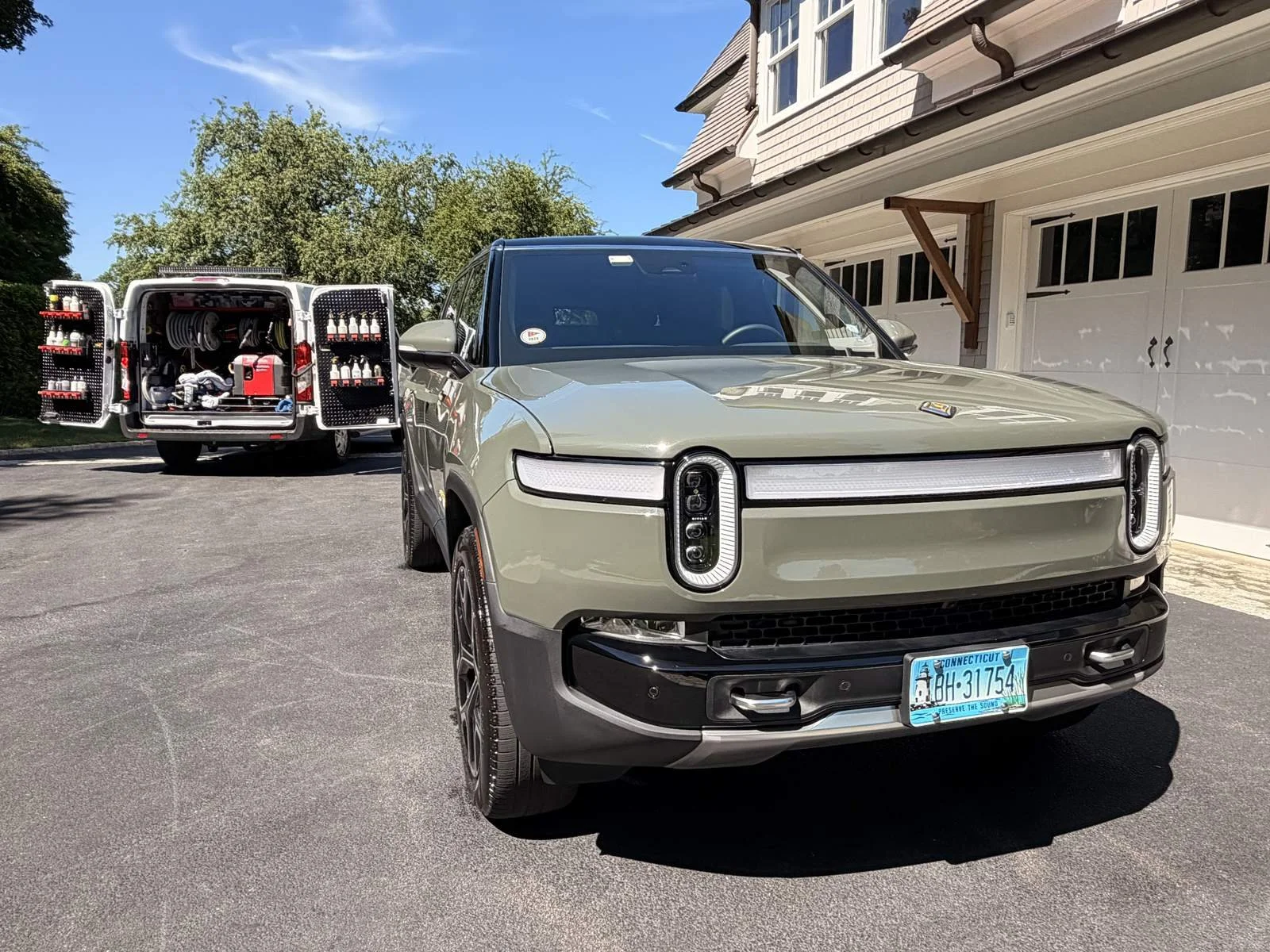
Electric vehicles bring their own questions about charge ports, sensors, and frunk and aero areas. The Rivian R1S coating guide covers those, and the Range Rover Sport coating guide and Porsche Cayenne coating guide cover large luxury SUVs.
Connecticut Factors That Change the Quote
Quick answer: Connecticut winters, road salt and brine, tree sap and pollen in wooded towns, coastal air near the Sound, and hard water all add contamination that has to come off before coating. They also affect when a coating can be applied and how often it needs washing afterward.
Where and how you drive in Connecticut shows up in your paint, and your paint shows up in the quote.
Road salt and winter treatment
A report from the Connecticut General Assembly’s Office of Legislative Research describes the state DOT pre-wetting road salt with a magnesium chloride solution, notes that those chlorides are corrosive, and says DOT recommends washing cars after snowstorms, including the undercarriage. Salt film, brine residue, and the grime that comes with them stick to paint, wheels, and lower panels. A car coming out of winter usually needs more washing and decontamination before coating than the same car in early fall.
Trees, sap, and pollen
Towns like New Canaan, Darien, Wilton, and Greenwich have lots of mature trees over driveways and streets. Tree sap, pollen, and bird droppings land on paint and can etch it if left too long. Formula X’s detailing cards list tree sap as an extra-charge item, and sap removal adds time to coating prep as well. Ceramic Pro’s aftercare page specifically says not to park a coated car under a shedding tree.
Coastal air and hard water
Homes near the Sound in Stamford, Rowayton, Norwalk, and Westport see more salt air and humidity. Well water and sprinklers can leave hard water spots that etch into clear coat. Both add decontamination and correction time. Ceramic Pro’s aftercare guidance also says not to leave hard water to dry on the paint, whether from washing or sprinklers.
Weather and scheduling
Coatings need a clean, dry surface and time to cure. Ceramic Pro’s aftercare page says its coatings cure enough to drive outside within 48 hours and that the typical cure takes up to two weeks, which is why it recommends waiting that long before washing. Cold, wet, or humid days can affect when a mobile installer can safely apply a coating, so ask how weather is handled and whether a garage is needed.
| Connecticut condition | Effect on prep | Effect on upkeep |
|---|---|---|
| Road salt and brine | More washing and decontamination | Wash more often in winter |
| Tree sap and pollen | Extra time for sap removal | Avoid parking under shedding trees |
| Coastal air and humidity | More contamination on paint and trim | Regular rinses help |
| Hard water and sprinklers | Water-spot correction | Dry the car after washing |
| Cold and wet weather | Scheduling and cure planning | Keep the car dry during cure |
For a deeper look at winter wear, read how long ceramic coating lasts in Connecticut winters.
Formula X Ceramic Pro Packages
Quick answer: Formula X’s Ceramic Pro package cards list three levels: Gold, described as “perfect for new vehicles and long term ownership”; Silver, “ideal for short term ownership”; and Bronze, “best for leased vehicles.” All three start with a gentle hand wash, iron decontamination, and a light clay bar. Every coating package is quoted after inspection.
These details are summarized from the package cards on Formula X’s Ceramic Pro coating in Stamford page and its other coating pages, including ceramic coating in Fairfield County and ceramic coatings in Connecticut.
| Ceramic Pro package | Card description | Warranty on the card | What the card lists |
|---|---|---|---|
| Gold | Perfect for new vehicles and long term ownership | 7 years | Gentle hand wash; iron decontamination and light clay bar; 1 layer Ceramic Pro on wheels; 3 layers Ceramic Pro 9H on all exterior surfaces; complimentary Ceramic Pro Rain on all windows |
| Silver | Ideal for short term ownership | 5 years | Gentle hand wash; iron decontamination and light clay bar; 1 layer Ceramic Pro Light; 1 layer Ceramic Pro 9H on all exterior surfaces; complimentary Ceramic Pro Rain on all windows |
| Bronze | Best for leased vehicles | 2 years | Gentle hand wash; iron decontamination and light clay bar; 1 layer Ceramic Pro Light on all exterior surfaces |
Reading the cards
- Paint correction isn’t on the cards. If your paint needs polishing before coating, that’s part of the quote after inspection, and it’s often the biggest part.
- Layers differ a lot. Gold lists three layers of 9H plus wheels and glass; Bronze lists one layer of Ceramic Pro Light. That difference in product and labor is a big reason the packages aren’t priced the same.
- “All exterior surfaces” should still leave out sensor faces and camera lenses where your manual says to. Confirm what will and won’t be coated.
- “Rain on all windows” may conflict with what your owner’s manual says about the windshield. Ask for it to be left off if so.
- Warranty terms: the cards print 7, 5, and 2 years. Ceramic Pro’s own current warranty document describes its packages differently (see the warranty section below), so ask Formula X which terms apply to your package and get them in writing.
Which package fits which owner
| Your situation | Package the cards point to | What to ask |
|---|---|---|
| New car you’ll keep for many years | Gold | Will a light polish be needed? What does the annual service involve? |
| Owned car, shorter horizon | Silver | What does the extra 9H layer add over Bronze? |
| Leased car | Bronze | Lease-return rules; does the coating help at turn-in? |
| Older car with swirled paint | Depends on goals | How much correction is worth doing first? |
| Matte paint or PPF | Ask first | Is a suitable product available? Does the film warranty allow it? |
No coating prices are listed here on purpose. Formula X quotes Ceramic Pro packages after seeing the paint, because the prep needed decides the final price. Anyone who quotes you a firm coating price without seeing the car is guessing about the most expensive part of the job.
Detailing Packages vs Ceramic Coating
Quick answer: Formula X’s detailing packages (Gold from $495+, Silver from $395+, Bronze Interior and Bronze Exterior from $295+) are cleaning and short-term protection services with published starting prices. Ceramic Pro coatings are a separate, longer-term service quoted after inspection. The names overlap, but they’re different products.
This is where a lot of confusion comes from. Formula X uses Gold, Silver, and Bronze for both its detailing packages and its Ceramic Pro packages. The detailing packages have published starting prices. The coating packages don’t, because they depend on the paint.
| Detailing package | Starting price | What the card lists |
|---|---|---|
| Gold (interior + exterior) | $495+ | Safe hand wash, clay bar decontamination, thorough vacuuming, ceramic sealer (about 6-month durability), interior steam cleaning, leather treatment, carpet shampoo, windows and exhaust tips, tire shine |
| Silver (interior + exterior) | $395+ | Safe hand wash, light vacuuming and wipe-down, 6+ month wax, dressed trim and tires, tire shine |
| Bronze Interior | $295+ | Thorough vacuuming, interior steam cleaning, leather treatment, windows and exhaust tips, carpet and upholstery shampoo |
| Bronze Exterior | $295+ | Hand wash, clay bar, windows and exhaust tips, protective ceramic sealer (6 months), tire shine |
The detailing cards note that prices vary with vehicle size and condition, and that there’s an additional charge for scratches, heavy soil, tree sap, hard water spots, and pet hair.
Ceramic sealer vs ceramic coating
The Gold detailing and Bronze Exterior cards mention a ceramic sealer with about six months of durability. That’s a spray-type protection applied as part of a detail. It’s not the same as a Ceramic Pro coating package, which is applied in layers after full prep and comes with a manufacturer warranty. If you want something affordable to get through a season, a detail with a sealer may be enough. If you want long-term protection, ask about a coating.
| Question | Detail with sealer | Ceramic Pro coating |
|---|---|---|
| Published price? | Yes: starting prices on the cards | No: quoted after inspection |
| How long the protection lasts | About 6 months, per the cards | Longer; see the manufacturer warranty terms |
| Paint correction included? | No | Not on the cards; quoted if needed |
| Interior cleaning? | Depends on package | Not on the coating cards; add a detailing package |
| Annual service? | No | Ceramic Pro’s warranty requires it for full terms |
Many owners pair a coating with a detailing package so the interior gets cleaned at the same time. See CT mobile car detailing, interior car detailing, and exterior detailing for what each covers.
Want a Real Ceramic Coating Quote for Your Car?
Send Formula X Mobile Auto Detailing & Ceramic Coating your vehicle’s year, make, and model, its color, whether it has matte paint, film, or an old coating, where it’s parked, how long you plan to keep it, and a few photos of the paint in good light. The team can tell you what prep it’s likely to need, which Ceramic Pro package fits, and what the quote will cover once the paint has been seen.
Warranty, Annual Service, and Upkeep Costs
Quick answer: The upfront price isn’t the whole cost. Ceramic Pro’s current US warranty document says its coating warranties require annual service by a Ceramic Pro installer, for a fee set by that installer, and that missing a service shortens the coverage. Budget for regular washing and that yearly visit when you compare packages.
Ceramic Pro’s coating warranty document (last updated 9/2025) lays out the manufacturer’s terms. These are Ceramic Pro’s terms, not promises made by Formula X, and they can change, so always ask for the current version that applies to your package.
| Ceramic Pro package | Manufacturer warranty, per Ceramic Pro’s document | If an annual service is missed |
|---|---|---|
| Gold | Lifetime of the vehicle, with annual services | Becomes 5 years from the last consecutive inspection |
| Silver | 5 years, with annual services | Becomes 2 years from the last consecutive inspection |
| Bronze | 2 years, with annual services | Becomes 1 year from the last consecutive inspection |
| Glass | 12 months | n/a |
| Wheel and caliper | 36 months | n/a |
The terms on the card and the manufacturer’s document don’t match exactly. Formula X’s Gold card prints a 7-year warranty, while Ceramic Pro’s current document lists Gold as lifetime with annual service. Before you book, ask Formula X which warranty terms apply to your package, how the warranty is registered, and get the answer in writing.
What the annual service involves
Ceramic Pro’s document says annual services must be done by a Ceramic Pro installer within 30 days before or after the anniversary of the original application or the last service, and that the installer sets the fee. It lists the service as an exterior wash, decontamination, visual inspection, and a sport coating, booster, or reapplication. Ask what that visit will cost at the time you get your coating quote, so the long-term cost is clear.
What the manufacturer warranty doesn’t cover
Ceramic Pro’s document lists exclusions that matter for everyday Connecticut driving. Among them: hard water spots, swirl marks, marring, scratches, scuffs, scrapes, and chips; damage from manual or automatic wash brushes, abrasive cloths, sponges, or materials; pre-existing damage; collision damage; and vehicles used for commercial purposes. It also says the warranty is invalid if the vehicle isn’t maintained according to Ceramic Pro’s recommended standards, and that the vehicle must stay registered and located in North America.
On road salt specifically, the document notes that many areas use road salts and chemicals in winter that can harm the vehicle and wheels, recommends cleaning more often in that season, and says failing to do so may greatly reduce the life of the product.
Upkeep costs to plan for
- Regular washing. Ceramic Pro’s aftercare page recommends washing a coated car every two weeks and a two-bucket hand wash at least monthly.
- The right soap. The same page says to avoid soaps with wax or petroleum distillates, or with high or low pH.
- No drive-through washes. Ceramic Pro’s aftercare page lists drive-thru car washes and hard brushing as things to avoid.
- Annual service. Needed to keep the full manufacturer warranty, for a fee set by the installer.
- Repairs after damage. Chips, scratches, and collision repairs aren’t covered, and repaired panels need to be re-treated.
If washing every two weeks and a yearly service visit sound unrealistic for you, say so when you ask for a quote. A lighter package, or a detail with a sealer, may suit you better than paying for coverage you won’t maintain.
What a Good Ceramic Coating Quote Should List
Quick answer: A good quote names the coating brand and products, the number of layers on the paint, every surface included, the level of paint correction planned, what prep is included, cure and aftercare instructions, the warranty terms and who registers them, and the cost and timing of any required annual service.
Use this checklist when you read a quote from Formula X or any other installer. If a line is missing, ask about it.
- Brand and product names. Which coating, and which version, for paint, wheels, glass, and trim.
- Layers. How many layers on the paint, and how many on each other surface.
- Surfaces included. Paint, door jambs, wheels (face only or barrels), glass (which windows), trim, calipers.
- Surfaces excluded. Sensors, cameras, the windshield if your manual says so, matte areas, film.
- Prep included. Wash, iron decontamination, clay, and surface prep before coating.
- Paint correction. Whether it’s included, what level, and what results to expect.
- Extras. Any charges for sap, hard water spots, heavy soil, scratches, or pet hair.
- Cure plan. How long to keep the car dry, when you can drive it, and when you can wash it.
- Warranty. Length, conditions, exclusions, and who registers it with the manufacturer.
- Annual service. What it includes and roughly what it costs.
- Location and logistics. Mobile or shop, power and water needs, weather plan.
- Insurance. Ask whether the installer carries insurance and can provide a certificate if your building or HOA asks for one.
Get it in writing. A written quote protects both sides. It sets expectations about results and makes it much easier to compare installers fairly.
Red Flags in Ceramic Coating Quotes
Quick answer: Watch for firm coating prices before anyone sees the car, no mention of paint correction on a used vehicle, vague product names, claims that a coating makes paint scratch-proof or means you never need to wash, warranties with no written terms, and pressure to book on the spot.
- “One price for every car.” Either prep is minimal or the real cost shows up later.
- No inspection before quoting. The paint’s condition is the biggest cost factor; it has to be seen.
- “Scratch-proof” or “never wash again.” Ceramic Pro’s own aftercare page says its coatings are “not bulletproof” and need routine aftercare.
- Coating over obvious swirls with no discussion. Ceramic Pro says a coating will amplify pre-existing damage.
- Unnamed products. “Ceramic coating” alone doesn’t tell you what you’re buying.
- Warranty with no paperwork. Manufacturer warranties usually need registration by a certified installer.
- Hidden annual costs. If annual service is required, its cost should be discussed up front.
- Pressure tactics. A good installer will give you time to think and compare.
Durability claims are manufacturer claims. When you see a coating described as lasting a certain number of years, that comes from the manufacturer’s warranty terms and assumes the maintenance conditions are met. How long a coating looks and performs on your car depends on how it’s washed, stored, and driven. The Connecticut winters longevity guide covers this in detail.
Comparing Ceramic Coating Installers in Fairfield County
Quick answer: Compare installers on the same basis: same product and layer count, same surfaces, same correction level, and the same warranty terms. Then look at certification, how they inspect the paint, how they handle sensors and glass, and whether they work at your location or at a shop.
Price alone is a poor way to compare coating installers, because the cheapest quote often covers less prep or fewer layers. Line quotes up side by side.
| Compare | Installer A | Installer B | What to look for |
|---|---|---|---|
| Coating product and layers | Named products and layer counts | ||
| Paint correction level | Matched to what your paint needs | ||
| Surfaces included | Wheels, glass, trim, jambs | ||
| Warranty and registration | Written terms, manufacturer registration | ||
| Annual service cost | Discussed up front | ||
| Location | Mobile or shop; cure plan | ||
| Insurance | Certificate available if asked |
Questions that show how an installer works
- How do you inspect paint before quoting? Do you measure paint thickness?
- Are you certified by the coating manufacturer you use?
- How do you handle sensors, cameras, and the windshield?
- What happens if the paint needs more correction than expected?
- How do you deal with weather and cure time for mobile work?
- Can I see examples of your work on similar vehicles?
Formula X’s work gallery and about page are a good starting point for how the team works. For towns served, see service areas.
When Ceramic Coating Is Worth It, and When It Isn’t
Quick answer: A coating tends to make the most sense on a car you’ll keep for a while, that’s washed regularly, and whose paint is in good shape or worth correcting. It makes less sense if you can’t keep up with washing, rely on brush car washes, or plan to sell soon.
| Usually a good fit | Usually a weaker fit |
|---|---|
| New or near-new car you plan to keep | Car you’re selling in a few months |
| Owner willing to hand wash or use touchless washes | Owner who relies on brush tunnel washes |
| Paint in good shape, or worth correcting | Paint with failing clear coat or heavy damage |
| Car parked outdoors through Connecticut winters | Car that will be repainted soon |
| Owner who wants easier cleaning | Owner expecting scratch-proof paint |
For leased vehicles, a lighter package can make sense if the goal is easier cleaning and a cleaner return. Check your lease-return rules first. If you’re not sure, a regular detail with a sealer can bridge a season while you decide. The BMW X5 scratch repair guide covers lease-return wear in more detail.
How to Get an Accurate Coating Quote from Formula X
Quick answer: Call (203) 945-9454 or use the contact page, share your vehicle details and photos of the paint, and plan for an inspection. The more Formula X knows up front, the closer the first estimate will be to the final quote.
- Share the basics: year, make, model, color, and whether it has matte paint, film, or an old coating.
- Send photos: the hood, roof, and doors in sunlight or under a flashlight, plus wheels and any damage.
- Say how long you’ll keep it and how it’s washed today.
- Describe where it’s parked: garage, driveway, or building lot, and whether there’s room to work.
- Book the inspection so the paint can be checked in person.
- Get the written quote and compare it using the checklist above.
You can reach Formula X through the contact page. Formula X is a mobile service, so the work can often happen at your home or office; see mobile detailing for how that works, or the Harbor Point apartment guide and office parking lot guide if you live or work in a building with a garage.
Formula X Mobile Auto Detailing & Ceramic Coating
Formula X Mobile Auto Detailing & Ceramic Coating is a mobile detailing, paint correction, scratch repair, and ceramic coating service based at 48 Union St, Stamford, CT 06906. The team works throughout Stamford, Greenwich, Darien, New Canaan, Norwalk, Rowayton, Westport, and other towns in lower Fairfield County, and Westchester County, NY.
For ceramic coating, that means inspecting the paint first, explaining what prep and correction it needs, recommending a Ceramic Pro package that fits how long you’ll keep the car, and quoting after the vehicle has been seen.
Call (203) 945-9454, email formulaxautodetail@gmail.com, send a request through the contact page, or view Formula X Mobile Auto Detailing & Ceramic Coating on Google Maps. Address: 48 Union St, Stamford, CT 06906.
Frequently Asked Questions About Ceramic Coating Cost in Connecticut
How much does ceramic coating cost in Connecticut?
It depends mostly on your paint's condition and how much prep it needs, plus vehicle size, the coating package and layers, and which surfaces are coated. Formula X quotes every ceramic coating after inspecting the vehicle. Its only published prices are detailing packages: Gold from $495+, Silver from $395+, and Bronze Interior or Bronze Exterior from $295+, with scratches extra.
Why won't Formula X give a coating price over the phone?
Because the biggest part of the cost is preparing the paint, and that can't be judged reliably without seeing it. A new car may need only a wash, decontamination, and a light polish, while an older car may need hours of correction. Photos help Formula X give a rough idea, and the final quote comes after inspection.
What makes one ceramic coating quote higher than another?
Usually the level of paint correction, the number of coating layers, and which surfaces are included, such as wheels, glass, and trim. Vehicle size, contamination like tree sap or hard water spots, special finishes, and the warranty and annual service plan also move the price. Compare quotes on the same products, layers, surfaces, and correction level.
Is paint correction included in a ceramic coating?
Not on Formula X's Ceramic Pro package cards. All three cards list a gentle hand wash, iron decontamination, and a light clay bar. If your paint has swirls, haze, or water spots that should be polished out before coating, that correction is part of the quote after inspection.
What do Formula X's Ceramic Pro packages include?
Per Formula X's cards, Gold lists 3 layers of Ceramic Pro 9H on exterior surfaces, 1 layer on wheels, and Ceramic Pro Rain on windows. Silver lists 1 layer of Ceramic Pro Light and 1 layer of 9H plus Rain on windows. Bronze lists 1 layer of Ceramic Pro Light on exterior surfaces. All start with a hand wash, iron decontamination, and a light clay bar.
Are Formula X's detailing packages the same as its coating packages?
No. The detailing packages (Gold from $495+, Silver from $395+, Bronze Interior and Bronze Exterior from $295+) are cleaning services with short-term protection like a ceramic sealer or wax. The Ceramic Pro packages share the Gold, Silver, and Bronze names but are a separate, longer-term coating service quoted after inspection.
What's the difference between a ceramic sealer and a ceramic coating?
Formula X's Gold detailing and Bronze Exterior cards list a ceramic sealer with about six months of durability, applied as part of a detail. A Ceramic Pro coating is applied in layers after full prep and comes with a manufacturer warranty that has its own maintenance conditions.
How long is the Ceramic Pro warranty?
Formula X's cards print 7 years for Gold, 5 for Silver, and 2 for Bronze. Ceramic Pro's current US warranty document lists Gold as lifetime, Silver as 5 years, and Bronze as 2 years, each requiring annual service, with shorter terms if a service is missed. Ask Formula X which terms apply to your package and get them in writing.
Does a ceramic coating warranty require annual service?
Ceramic Pro's warranty document says annual services must be done by a Ceramic Pro installer within 30 days before or after the anniversary date, for a fee set by the installer. The service includes a wash, decontamination, inspection, and a booster or reapplication. Missing it shortens the warranty.
What doesn't a ceramic coating warranty cover?
Ceramic Pro's warranty document excludes items such as hard water spots, swirl marks, scratches, scuffs, and chips; damage from wash brushes or abrasive materials; pre-existing and collision damage; and commercial vehicles. It also says neglecting the recommended maintenance can invalidate the warranty.
Do Connecticut winters change the cost of a coating?
They can affect prep. Road salt, brine, tree sap, coastal air, and hard water all leave contamination that has to come off before coating. Ceramic Pro's warranty document also recommends cleaning more often in winter where road salt is used, which adds to upkeep.
Is ceramic coating worth it on a leased car?
It can be if you want easier cleaning and a cleaner return. Formula X's Bronze Ceramic Pro card describes it as best for leased vehicles. Check your lease-return rules first, and ask whether a lighter package or a detail with a sealer fits your timeline better.
What should a ceramic coating quote include?
The coating brand and products, layers on the paint, every surface included and excluded, the paint correction planned, prep steps, cure and aftercare instructions, warranty terms and who registers them, and the cost of any required annual service. Ask about insurance if your building or HOA requires a certificate.
Where is Formula X Mobile Auto Detailing & Ceramic Coating located?
Formula X Mobile Auto Detailing & Ceramic Coating is located at 48 Union St, Stamford, CT 06906. It is a mobile service that travels to customers in Stamford, Greenwich, Darien, New Canaan, Norwalk, and the rest of lower Fairfield County, plus Westchester County, NY. Call (203) 945-9454 or open the Google Maps listing for directions.
Find Formula X Mobile Auto Detailing & Ceramic Coating
Formula X Mobile Auto Detailing & Ceramic Coating is a mobile service based at 48 Union St, Stamford, CT 06906. Use the map for directions to the business address, or call (203) 945-9454 to arrange service at your location.
View Formula X Mobile Auto Detailing & Ceramic Coating on Google Maps
Get a Ceramic Coating Quote Based on Your Paint
Call Formula X Mobile Auto Detailing & Ceramic Coating at (203) 945-9454 or send a request with your vehicle’s year, make, and model, its color, any matte paint, film, or previous coating, how long you plan to keep it, where it’s parked, and photos of the paint. The paint is inspected before any coating or correction is quoted, and the quote spells out the products, layers, surfaces, and warranty terms.
48 Union St, Stamford, CT 06906 · Serving Stamford, Greenwich, lower Fairfield County, and Westchester County, NY
Recent Formula X detailing work