
Formula X Mobile Auto Detailing & Ceramic Coating · Ceramic Coating Longevity Guide
Ceramic coatings are sold with big numbers attached: two years, five years, even the lifetime of the vehicle. Connecticut winters are where those numbers get tested. Salt brine sprayed before storms, sand and grit thrown up by plows, slush that freezes and thaws on your lower panels, and months of washing in the cold all wear on a coating in ways a brochure can’t show. How long a coating lasts on your car depends less on the label and more on what happens between washes: how the paint was prepared, how often salt comes off, what kind of car wash you use, where the car sleeps at night, and whether the coating gets its yearly service. This guide separates manufacturer warranty claims from real-world wear, explains what winter does to a coating, and shows how to keep one working through Fairfield County winters. Formula X Mobile Auto Detailing & Ceramic Coating is based at 48 Union St, Stamford, CT 06906, and can be reached at (203) 945-9454.
How long does ceramic coating last in Connecticut winters?
A professional ceramic coating can last through several Connecticut winters, but how many depends on prep, the product and number of layers, and especially on maintenance. Manufacturers state durability as warranty terms with conditions: Ceramic Pro’s current US warranty document, for example, ties its longer terms to annual service by a Ceramic Pro installer and says road salt can greatly reduce the life of the product if the car isn’t cleaned more often in winter. Frequent salt removal, gentle washing, and yearly decontamination keep a coating working longer; brush car washes, salt left to sit, and skipped maintenance shorten it. Formula X doesn’t promise a number of years. Any warranty period comes from the coating manufacturer, on the manufacturer’s terms.
In practice, a coating rarely fails all at once. It gradually loses slickness and water beading as salt film, traffic grime, and mineral deposits build up on top of it. Much of that loss can be restored with a proper decontamination wash and a booster. Real wear, where the coating has been abraded away, happens most on lower panels, the front end, and wheels, and it speeds up with abrasive washing.
Where the details come from: Warranty and aftercare details come from Ceramic Pro’s published coating warranty document and aftercare page. Road salt details come from the Connecticut General Assembly’s Office of Legislative Research. Package details come from Formula X’s own package cards.
Manufacturer Durability Claims vs Real Life
Quick answer: The years attached to a coating are the manufacturer’s warranty terms, and they come with conditions such as certified installation, regular washing to the manufacturer’s standards, and annual service. They describe what the manufacturer will stand behind, not how every coating will look on every car in every climate.
Ceramic Pro’s current US warranty document (last updated 9/2025) lists the following terms for its main coating packages. These are Ceramic Pro’s claims and conditions, not a promise from Formula X.
| Ceramic Pro package | Warranty, per Ceramic Pro’s document | If an annual service is missed |
|---|---|---|
| Gold | Lifetime of the vehicle, with annual services | Becomes 5 years from the last consecutive inspection |
| Silver | 5 years, with annual services | Becomes 2 years from the last consecutive inspection |
| Bronze | 2 years, with annual services | Becomes 1 year from the last consecutive inspection |
| Sport | 6 months, no annual service required | n/a |
| Glass | 12 months | n/a |
| Wheel and caliper | 36 months | n/a |
Check which terms apply to you. Formula X’s own Ceramic Pro package cards print 7 years for Gold, 5 years for Silver, and 2 years for Bronze, which isn’t identical to the manufacturer’s current document. If you have a Formula X Ceramic Pro coating, or are thinking about one, ask which warranty terms apply to your package and keep the paperwork.
What the warranty actually covers
Ceramic Pro’s document says the coating is warranted against unsatisfactory performance in protecting factory paint from oxidation and from damage by bird droppings, bug splatter, tree sap, and UV, among other things, provided it has been maintained under the warranty terms. It excludes hard water spots, swirl marks, marring, scratches, scuffs, scrapes, and chips, along with damage from wash brushes and abrasive materials. In other words, the warranty is about the coating’s chemical protection, not about keeping paint free of physical wear.
Why real-world life varies
Two cars with the same package can age very differently. One is garaged, hand washed every couple of weeks, and serviced every year. The other sits outside on a salted street, goes through a brush tunnel wash, and never gets decontaminated. The coating on the second car will lose its slickness much sooner, and parts of it may be worn through. The label is the same; the life isn’t.
What extends life
Good prep, more layers, regular gentle washing, prompt salt removal, decontamination, annual service, and garage parking.
What shortens life
Coating over contaminated or swirled paint, brush car washes, salt left for weeks, harsh or wax-based soaps, and skipped maintenance.
What a coating can’t stop
Rock chips, scratches, dents, and collision damage. Ceramic Pro’s aftercare page says its coatings are “not bulletproof.”
What usually comes back
Lost beading from built-up grime often returns after a decontamination wash and booster, rather than needing a full recoat.
What Connecticut Winters Do to a Ceramic Coating
Quick answer: Winter attacks a coating in three ways: chemically, through salt and brine residue that bonds to the surface; physically, through sand, grit, and abrasive washing; and by neglect, because cold weather makes owners wash less often. All three reduce slickness and beading, and abrasion can wear the coating away on exposed panels.
A coating is a thin, hard layer, and it’s designed to take the hit so the clear coat underneath doesn’t. In a Connecticut winter, that layer is constantly coated in film and grit.
| Winter stressor | What it does | How to limit it |
|---|---|---|
| Road salt and brine | Leaves a crusty, sticky film that clogs the coating’s surface and dulls beading | Rinse and wash more often in winter |
| Sand and grit | Acts like sandpaper when wiped or brushed | Pre-rinse thoroughly; never dry-wipe |
| Slush and freeze-thaw | Keeps lower panels wet with salty water for long periods | Rinse lower panels and wheel wells |
| Brush car washes | Abrades the coating, especially on horizontal panels | Hand wash or use a touch-free option |
| Washing less often | Lets contamination bond and build up | Plan for warmer midday washes or a mobile wash |
| Ice scrapers and snow brushes | Scratches paint and glass coatings | Use soft snow brooms on paint; scrape only glass |
None of these will destroy a coating in a single storm. They add up over a season, and over several seasons they decide whether a coating still works in year three or has to be redone.
Road Salt and Brine on a Coated Car
Quick answer: Connecticut’s winter road treatments leave corrosive chloride residue on cars. Ceramic Pro’s own warranty document says road salt can greatly reduce a coating’s life unless the car is cleaned more often in winter. Washing salt off promptly, including the lower panels and wheels, is the single most useful thing you can do for coating life.
The Connecticut General Assembly’s Office of Legislative Research describes the state DOT pre-wetting road salt with a magnesium chloride solution, notes that those chlorides are corrosive, and says DOT recommends washing cars after snowstorms, including the undercarriage. Ceramic Pro’s warranty document makes a similar point from the coating side: many areas use road salts and chemicals in winter that can harm the vehicle and wheels, cleaning more often in that season is recommended, and failing to do so “may greatly reduce the life of the product.”
Why salt film matters to a coating
A fresh coating is slick and beads water because its surface is clean and smooth. Salt residue and road film sit on top of that surface and fill it in. The coating underneath may still be intact, but it behaves like uncoated paint: water stops beading, grime sticks, and washing gets harder. Leave it long enough and the film gets harder to remove, which tempts owners into scrubbing, and scrubbing is what wears coatings away.
Salt-removal habits that help
- Rinse after storms once roads dry, focusing on lower doors, rocker panels, rear bumper, and wheels.
- Use a coating-safe soap. Ceramic Pro’s aftercare page says to avoid soaps with wax or petroleum distillates, or with high or low pH.
- Don’t forget the undercarriage. The coating is on the paint, but DOT’s advice about the undercarriage still applies to the rest of the car.
- Wheels first. Wheels collect the most salt and brake dust; clean them with separate tools so grit doesn’t reach the paint.
- Dry the car. Ceramic Pro recommends a dedicated microfiber drying towel to reduce water spotting.
Washing in the cold. If temperatures are below freezing, water can freeze in door seals, locks, and on the paint. Many owners wait for a milder midday or use a heated garage or a professional wash. A mobile detail on a mild day is another option.
Freeze-Thaw, Sand, and Slush
Quick answer: Freeze-thaw cycles keep salty slush on lower panels for days at a time, and the sand mixed in acts as an abrasive whenever it’s wiped or brushed. The coating itself doesn’t crack from cold, but the grime and grit that come with winter wear it down if they’re not rinsed off carefully.
Connecticut winters often swing above and below freezing. Snow melts during the day, refreezes overnight, and the slush that collects behind wheels and along rocker panels can stay wet and salty for long stretches. Every time you get in or out, it’s easy to brush against a dirty door or rocker with your coat or bag, dragging grit across the paint.
How sand wears a coating
The coating is harder than bare clear coat, but it’s still very thin. Grit dragged across it under pressure, by a dry towel, a brush, a snow broom with stiff bristles, or a car-wash brush, leaves fine marring. Over a winter, that marring accumulates on the panels you touch and wash most. That’s why the first rule of winter washing is a thorough rinse before anything touches the paint.
Snow and ice removal
- Use a soft foam snow broom on paint, and push snow off rather than scraping.
- Leave a thin layer of snow on paint rather than scraping down to the surface.
- Use an ice scraper only on glass, and be gentle on coated glass.
- Don’t pour hot water on frozen glass or paint.
- Let the defroster do the work on the windshield before scraping.
Ice scrapers on paint will scratch it, coating or not. Ceramic Pro’s warranty excludes scratches and marring, so damage from scraping isn’t covered.
Shoreline Air, Hard Water, and the Rest of the Year
Quick answer: Winter isn’t the only thing a Connecticut coating has to survive. Salt air near Long Island Sound, hard water from wells and sprinklers, spring pollen and tree sap, and summer sun all add wear. A coating that’s maintained year-round heads into each winter in better shape.
When owners ask how long a coating lasts “in winter,” they’re really asking how long it lasts in Connecticut, because the damage from one season carries into the next. A coating that spent the summer covered in sap and sprinkler spots and the fall under wet leaves is already partly clogged before the first salt truck goes out.
Living near the water
Homes in Rowayton, Shippan, Old Greenwich, Noroton, and along the Norwalk and Westport shoreline see more salt air, humidity, and morning dew. That moisture leaves a film on paint and glass, and when it dries it can leave mineral residue behind. A coating makes that film easier to rinse away, but it still needs rinsing. If your car sits outside near the water, plan on more frequent rinses than an inland car, especially on the side facing the Sound.
Hard water and sprinklers
Well water and irrigation systems are common in Fairfield County, and both can carry minerals that spot paint and glass as water evaporates. Ceramic Pro’s aftercare page says not to leave hard water to dry on the paint, whether from washing or from sprinklers. Its warranty excludes hard water spots, so spotting is one of the most common things a coating owner ends up paying to correct. Move the car out of sprinkler range, or rinse and dry it if it gets hit.
Pollen, sap, and leaves
Spring pollen and summer tree sap are sticky and acidic, and fall leaves trap moisture against the paint. Ceramic Pro advises not parking under a shedding tree. In wooded parts of New Canaan, Wilton, Darien, and Greenwich, that’s hard to avoid entirely, so the practical answer is washing sooner rather than later when the car is covered.
Summer sun and hot panels
Ceramic Pro’s warranty describes its coatings as protecting factory paint from UV damage, among other things. Its aftercare page also says to wash only in the shade or early or late in the day, and never on panels that are warm to the touch, because soap and water dry too fast on hot paint and leave spots.
| Non-winter threat | Where it’s worst | Simple habit that helps |
|---|---|---|
| Salt air and dew | Shoreline neighborhoods | More frequent rinses |
| Hard water spots | Homes with wells or sprinklers | Park away from sprinklers; dry after rinsing |
| Pollen and sap | Wooded towns in spring and summer | Wash promptly; avoid parking under trees |
| Wet leaves | Fall, everywhere | Clear cowls and roof; don’t let leaves sit |
| Hot panels | Summer afternoons | Wash early, late, or in shade |
Where Coatings Wear First in Winter
Quick answer: Lower doors and rocker panels, the front bumper and hood edge, the rear bumper and tailgate, wheels, and door handles usually lose performance first. They get the most salt spray, grit, and contact. The roof and upper doors typically hold up longest.
A coating doesn’t wear evenly. Some areas take far more abuse than others, and that’s where you’ll notice beading fade first.
| Area | Why it wears | What helps |
|---|---|---|
| Rocker panels and lower doors | Constant salt spray, slush, and grit; brushed by clothing | Rinse after storms; extra care when washing |
| Front bumper and hood edge | Road spray, sand, stone chips, bugs in warmer months | Gentle pre-rinse; consider PPF for chips |
| Rear bumper and tailgate | Road spray drawn into the low-pressure area behind SUVs and wagons | Wash every time, even on quick rinses |
| Wheels | Brake dust, heat, salt, and harsh cleaners | Coating-safe wheel cleaner; separate tools |
| Door handles and trunk lip | Fingernails, rings, keys, and gloves | Wipe gently; avoid dry-wiping grit |
| Windshield | Wipers, scrapers, and washer fluid | Check your manual before coating it; expect shorter glass-coating life |
Ceramic Pro’s own warranty terms reflect this split. Its glass coating warranty is 12 months and its wheel and caliper warranty is 36 months, much shorter than the paint packages, because glass and wheels take more abuse.
Paint protection film for the front end
A coating won’t stop rock chips. If your commute includes highways in winter, where sand and small stones fly, paint protection film on the front bumper, hood, and mirrors is the product designed for that. Film and coatings are often used together, with the coating on top of the film. Ceramic Pro’s warranty notes that coatings on PPF or vinyl are tied to the warranty of the film underneath. The Rivian R1S guide and Range Rover Sport guide cover coating over film.
Why Prep and Paint Correction Decide Lifespan
Quick answer: A coating bonds to whatever surface it’s applied to. If that surface still holds contamination, polishing oils, or failing clear coat, the bond is weaker and the result can fail early. Thorough decontamination and correction before coating give it the best chance of lasting through several winters.
Most early coating failures trace back to prep, not to the product. Ceramic Pro’s warranty document strongly recommends a machine polish by the installer on any vehicle more than three months old, and says “any coating will amplify any pre-existing damage on the substrate.” It also says imperfections such as chips, scuffs, and scrapes should be addressed before application.
- Wash to remove loose dirt and salt.
- Iron decontamination to dissolve embedded brake dust and rail dust.
- Clay to pull bonded contamination off the paint.
- Inspection under good light, sometimes with paint thickness readings.
- Paint correction as needed, to remove swirls, haze, and water spots.
- Surface prep to remove polishing oils so the coating bonds directly to clear coat.
- Coating, applied panel by panel, and left to cure.
If any of the early steps are rushed, especially decontamination and oil removal, the coating can lose performance much sooner than its label suggests. That’s one reason prep is the largest part of what you pay for, as explained in the Connecticut ceramic coating cost guide. Formula X’s paint correction page explains the service, and the G-Wagon paint correction guide shows how correction decisions are made.
Repainted panels need extra care. Fresh body-shop paint needs time to cure before it’s coated, and thinner or older paint limits how much correction is safe. Tell the installer about any paint or bodywork history.
When to Coat Before a Connecticut Winter
Quick answer: Early to mid fall is usually the best window: the paint can be cleaned of summer contamination, temperatures are still mild for application, and the coating has time to cure before salt trucks go out. Ceramic Pro’s aftercare page says its coatings cure enough to drive within 48 hours, with a typical cure of up to two weeks before washing.
Timing matters more in Connecticut than in warmer states. A coating applied in the middle of winter can work, but it’s harder to get the car properly clean and dry, harder to keep it dry during the cure, and the first wash may be needed before the coating has fully set.
| Time of year | Pros | Cons |
|---|---|---|
| Early fall | Mild temperatures; time to cure before salt season | Leaf fall and sap; book early |
| Late fall | Still before most storms | Colder, shorter days; less margin for weather |
| Midwinter | Protection for the rest of the season | Salt prep, cold, and cure time are harder; often needs a garage |
| Spring | Removes winter grime and corrects salt damage before summer | Pollen season; coat after a thorough decontamination |
| Summer | Warm and dry for application | Avoid hot panels and direct sun during application |
If your car is already coated, fall is a good time for its annual service or a decontamination wash, so it heads into winter as slick as possible.
Keep the car dry and out of salt during the cure. Ask your installer how long to wait before driving in rain, snow, or on salted roads, and when the first wash is safe. Ceramic Pro’s aftercare page recommends waiting until the cure is complete before washing.
Washing a Coated Car in Winter
Quick answer: Ceramic Pro’s aftercare page recommends washing a coated car every two weeks and a two-bucket hand wash at least once a month, with a pH-neutral soap free of wax and petroleum distillates. It also says to avoid drive-thru car washes and hard brushing. In winter, wash more often when roads are salted, and always rinse thoroughly first.
Washing is where coatings are kept alive or worn away. A coating makes washing easier, but only if the wash is gentle.
| Wash method | Effect on a coating | Winter notes |
|---|---|---|
| Two-bucket hand wash | Gentlest; recommended by Ceramic Pro at least monthly | Needs a milder day, warm water, or a garage |
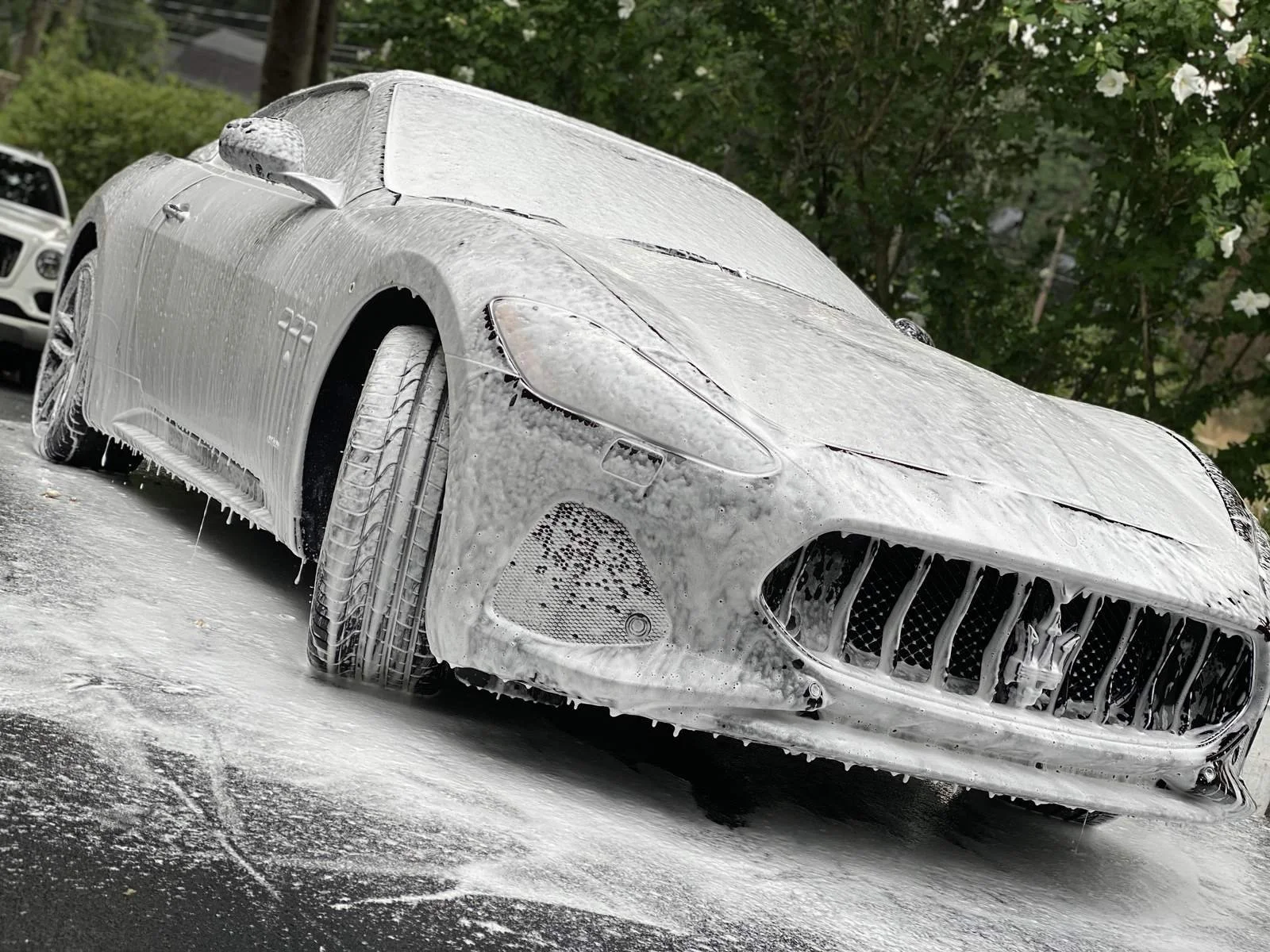
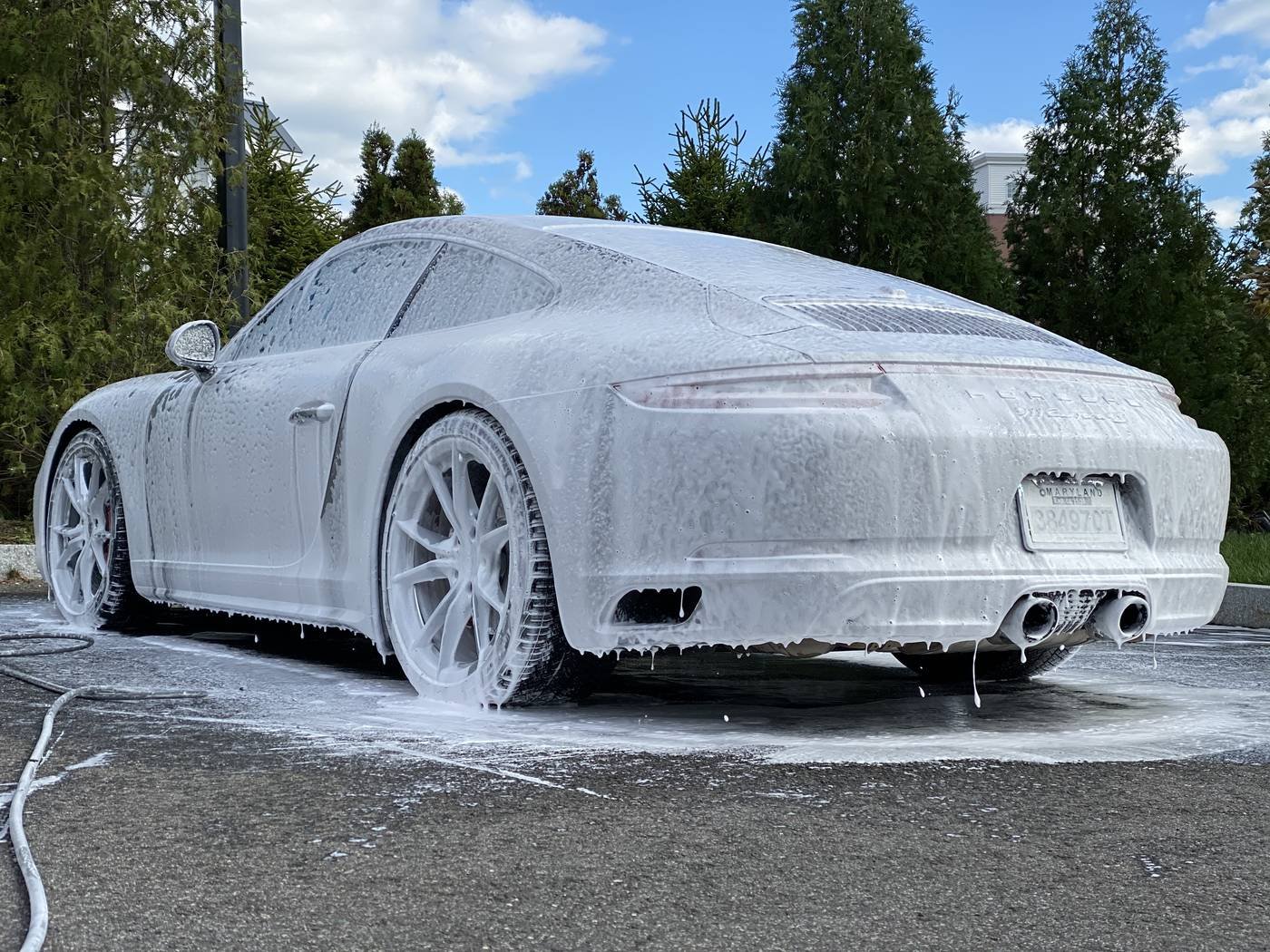
| Foam pre-wash and rinse | Lifts grit before contact | Good between full washes after storms |
| Touch-free automatic wash | No brushes, but strong chemicals may be used | Useful for salt removal when hand washing isn’t possible; ask about soap strength |
| Brush or soft-cloth tunnel wash | Abrades the coating; listed by Ceramic Pro as one to avoid | Convenient but shortens coating life |
| Waterless or rinseless wash | Fine for light dust; risky on heavy salt and sand | Not a substitute for a rinse when the car is caked in grit |
| Professional mobile wash | Gentle method at your location | Depends on weather and access to space |
A winter wash routine
- Pick a day above freezing if you can, and wash in the shade or a garage. Ceramic Pro says never to wash a panel that’s warm or hot to the touch.
- Rinse thoroughly, starting with wheels, wheel wells, and lower panels.
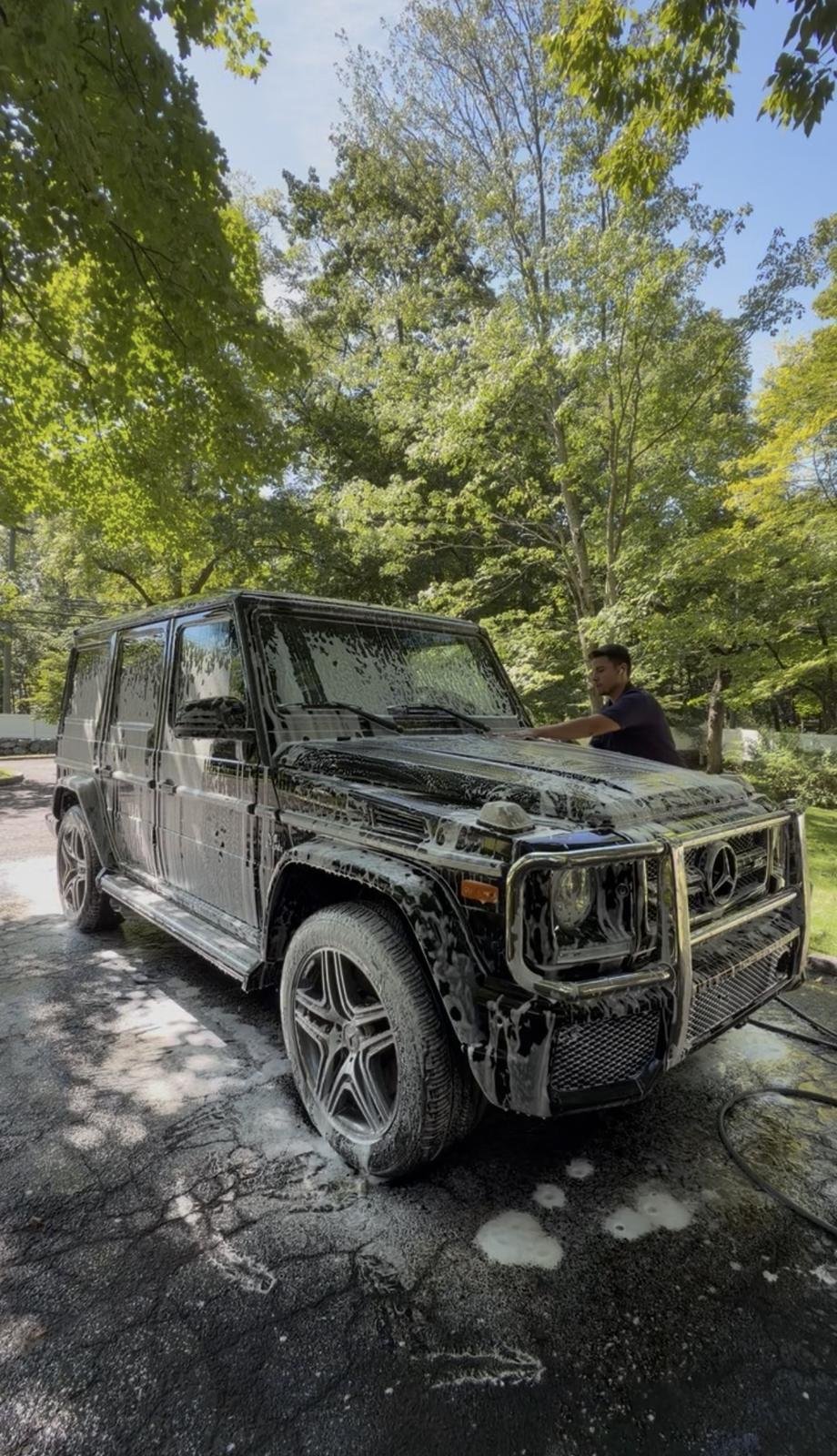
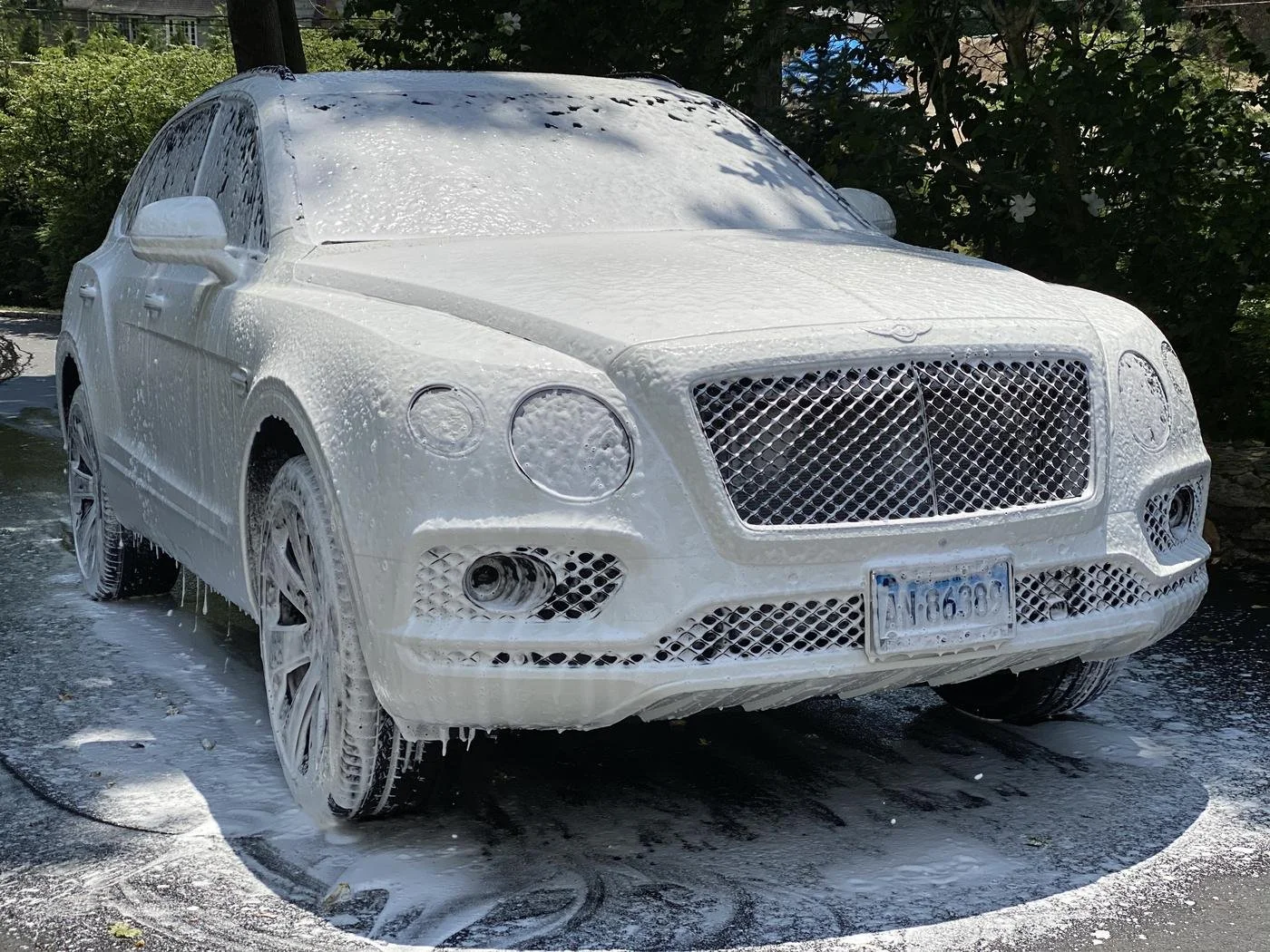
- Foam pre-wash to loosen salt film before touching the paint.
- Two-bucket wash with a coating-safe soap, top down, lower panels last.
- Rinse again, then dry with a clean microfiber drying towel.
- Open and wipe door jambs and dry seals so doors don’t freeze shut.
Products to avoid
- Soaps with wax or petroleum distillates, or with high or low pH, per Ceramic Pro.
- Strong degreasers and harsh wheel acids on coated surfaces.
- Household cleaners and dish soap.
- Dry towels or dusters on a dirty car.
If you don’t have space to wash at home, a mobile car detail or an exterior detail in Stamford can handle it. Formula X’s detailing packages start at Silver from $395+ and Bronze Exterior from $295+, with prices varying by size and condition.
Garage, Driveway, or Street Parking
Quick answer: Garage parking generally helps a coating last longer by keeping the car out of snow, sap, bird droppings, and sun. A heated garage can keep salty slush wet longer, so rinse it off. Driveway and street-parked cars face more contamination and need more frequent washing.
| Where the car sleeps | Benefits | Watch out for |
|---|---|---|
| Attached or heated garage | Protection from snow, sap, birds, and sun; easier winter washing | Melting slush keeps salt wet on lower panels; rinse it off |
| Unheated or detached garage | Protection from falling contamination | Cold makes washing harder |
| Open driveway | Easy access for a mobile detail | Tree sap, pollen, bird droppings, and sprinklers |
| Street parking | None for the coating | Plow spray, salt, and road grime |
| Apartment or office garage | Covered parking | Building rules for washing; ask before a mobile detail |
Ceramic Pro’s aftercare page specifically says not to park under a shedding tree and not to let hard water dry on the paint from sprinklers. In wooded towns like New Canaan, Darien, and Greenwich, that can matter as much as winter salt. If you park in a building garage, the Harbor Point apartment guide and the office parking lot guide cover what to ask your building before a mobile wash.
Covers and carports
Some owners without a garage use a car cover or a carport. A carport keeps snow, sap, and bird droppings off the roof and hood without touching the paint, which is helpful. A cover is trickier in winter. If it goes on over a salty, gritty car, or flaps in the wind, it can rub that grit into the coating. If you use one, put it on a clean, dry car, make sure it fits snugly, and take it off before it freezes to the surface. On a daily driver that sees salted roads, frequent rinsing usually does more for the coating than a cover.
Mobile service at home
Because Formula X is a mobile service, many winter washes and decontaminations can happen in your own garage or driveway on a mild day. Tell the team whether you have a garage, how much room there is around the car, and whether power and water are available, so the visit can be planned around the weather.
Want Your Coating Checked Before Winter?
Send Formula X Mobile Auto Detailing & Ceramic Coating your vehicle details, when it was coated and by whom, which product or package if you know, how it’s washed, where it’s parked, and a few photos of the paint and how water behaves on it. The team can tell you whether it needs a decontamination wash, a booster, correction and a fresh coating, or just a better winter wash routine.
Annual Service and Boosters
Quick answer: Ceramic Pro’s warranty requires an annual service by a Ceramic Pro installer within 30 days before or after the anniversary date, for a fee set by the installer. The visit includes an exterior wash, decontamination, a visual inspection, and a sport coating, booster, or reapplication. In Connecticut, scheduling it in the fall sets the coating up for winter.
The annual service exists because even a well-maintained coating collects contamination that ordinary washing doesn’t remove. Ceramic Pro’s aftercare page explains that the decontamination wash removes debris that can “clog the coatings,” and that a booster improves the self-cleaning effect.
| Part of the service | What it does | Why it matters after winter |
|---|---|---|
| Exterior wash | Removes loose dirt and film | Clears salt and road grime |
| Decontamination | Removes bonded iron, minerals, and residue | Restores the slick surface clogged by brine and road film |
| Visual inspection | Checks for wear, damage, and weak areas | Finds worn lower panels and chips |
| Booster or reapplication | Adds a fresh top layer where needed | Refreshes high-wear areas |
Ceramic Pro’s document says that if an annual service is missed, the warranty shortens to the package’s minimum term, for example Gold to 5 years and Silver to 2 years from the last consecutive inspection, and that annual services are then no longer required but are still recommended. It also says the warranty can only transfer to a new owner through an annual service.
Ask about the annual service fee up front. Because the installer sets the fee, the time to ask is when you’re getting the coating quote. The ceramic coating cost guide explains why upkeep belongs in the total cost.
Signs a Coating Is Clogged or Worn
Quick answer: If water stops beading and sheeting, dirt sticks more, and the paint feels rough after washing, the coating is probably clogged with contamination rather than gone. A decontamination wash usually tells you which it is. If performance doesn’t return on certain panels after proper decontamination, the coating may be worn there.
Water beading fades
Beading drops off first on the lower panels and front end. On its own, this usually means grime is sitting on top of the coating.
Paint feels rough after washing
Run the back of your fingers, inside a thin plastic bag, over a clean panel. A gritty feel means bonded contamination that a normal wash didn’t remove.
Dirt sticks and washing is harder
If grime that used to rinse off now needs scrubbing, the slick surface has been clogged or worn.
Uneven behavior across the car
Strong beading on the roof but none on the doors after a full decontamination suggests wear on the lower panels.
Water spots that won’t wash off
Mineral spots that have etched into the surface may need correction. Ceramic Pro’s warranty excludes hard water spots.
Visible swirls and haze returning
New marring usually comes from washing. It means the coating has been abraded, and correction plus recoating may be needed on those panels.
Don’t judge a coating right after a salt storm. Almost any coating looks dead under a layer of brine. Wash and decontaminate first, then check.
Refresh, Recoat, or Remove?
Quick answer: If decontamination brings back most of the slickness, a booster or top coat is often enough. If some panels are worn and swirled, correction and a recoat on those areas may be needed. If the coating is uneven, failing, or was applied over defects, it’s usually removed by machine polishing before a new one goes on.
| What you find | Likely next step | Notes |
|---|---|---|
| Beading returns after decontamination | Booster or top coat | Often part of an annual service |
| Worn lower panels, rest is fine | Spot correction and recoat on worn panels | Ask whether it affects the warranty |
| Swirls and haze over most of the car | Correction and full recoat | Quoted after inspection |
| High spots, streaks, or a coating over defects | Polish off and start again | Workmanship issues aren’t covered by Ceramic Pro’s warranty |
| Unknown coating from a previous owner | Inspection, then decide | May need removal before a new product |
How coatings are removed
Ceramic coatings are hard and chemically resistant, so they generally can’t be stripped with soap. Removal is done by machine polishing, which also removes a small amount of clear coat. That’s another reason to avoid recoating more often than needed, and to keep the coating maintained so it doesn’t have to be removed. The classic Corvette paint correction guide explains why paint thickness matters whenever polishing is involved.
Formula X Ceramic Pro Packages and Longevity
Quick answer: Formula X’s Ceramic Pro cards list Gold (3 layers of Ceramic Pro 9H, wheels, and glass), Silver (1 layer of Ceramic Pro Light plus 1 layer of 9H, and glass), and Bronze (1 layer of Ceramic Pro Light). More layers and more coated surfaces generally mean more protection to wear through. All coating packages are quoted after inspection.
These details come from the cards on Formula X’s Ceramic Pro coating in Stamford and ceramic coating in Fairfield County pages.
| Package | Card description | Warranty on the card | What the card lists |
|---|---|---|---|
| Gold | Perfect for new vehicles and long term ownership | 7 years | Gentle hand wash; iron decontamination and light clay bar; 1 layer Ceramic Pro on wheels; 3 layers Ceramic Pro 9H on all exterior surfaces; complimentary Ceramic Pro Rain on all windows |
| Silver | Ideal for short term ownership | 5 years | Gentle hand wash; iron decontamination and light clay bar; 1 layer Ceramic Pro Light; 1 layer Ceramic Pro 9H on all exterior surfaces; complimentary Ceramic Pro Rain on all windows |
| Bronze | Best for leased vehicles | 2 years | Gentle hand wash; iron decontamination and light clay bar; 1 layer Ceramic Pro Light on all exterior surfaces |
- Warranty years are the card’s terms and, behind them, the manufacturer’s. Ask Formula X which terms and conditions apply to your package.
- Paint correction isn’t on the cards. It’s quoted after inspection, and it has a big effect on how well the coating lasts.
- Coated wheels on the Gold card help with winter brake dust and salt, which are hardest on wheels.
- Glass coating should follow your owner’s manual for the windshield; some manuals advise against water-repelling coatings there.
For seasonal cleaning between coating services, Formula X’s detailing packages are Gold from $495+, Silver from $395+, and Bronze Interior or Bronze Exterior from $295+, with prices varying by vehicle size and condition and extra charges for scratches, heavy soil, tree sap, hard water spots, and pet hair. Winter cabins take a beating too; see interior car detailing and the Range Rover interior detailing guide.
A Season-by-Season Plan for a Coated Car
Quick answer: Fall: decontaminate, service, and get ready. Winter: rinse salt often, wash gently, and never dry-wipe. Spring: deep clean, decontaminate, and check for wear. Summer: wash in the shade, remove bird droppings and sap promptly, and dry the car after sprinklers or rain.
| Season | Main threats | What to do |
|---|---|---|
| Fall | Leaves, sap, early brine | Annual service or decontamination; new coatings applied early enough to cure |
| Winter | Salt, brine, sand, slush | Rinse after storms; gentle washes; soft snow broom; dry jambs |
| Early spring | Leftover salt film and grit | Full wash and decontamination; inspect lower panels; undercarriage rinse |
| Late spring | Pollen and tree sap | Wash more often; avoid parking under shedding trees |
| Summer | UV, bird droppings, bugs, hot panels | Wash in shade; remove droppings quickly; dry after sprinklers |
Following a plan like this is the main thing within your control. It’s also what Ceramic Pro’s warranty asks owners to do, since it can be invalidated by neglecting to maintain the vehicle to Ceramic Pro’s recommended standards.
Winter Checklist for Coated-Car Owners
Quick answer: Before winter, confirm your coating’s warranty terms and annual service date, get a decontamination wash, and stock coating-safe soap, microfiber towels, and a soft snow broom. During winter, rinse salt after storms, avoid brush washes, dry jambs, and never dry-wipe a dirty car. After winter, decontaminate and inspect.
Use this list each fall. It turns everything in this guide into a handful of habits.
- Find your paperwork. Know which product and package you have, who installed it, the warranty terms, and the annual service date.
- Book the annual service within the window in your warranty, ideally in fall before salt season.
- Get a decontamination wash if the coating has lost slickness since summer.
- Fix chips and scratches early. Touch-up before winter keeps salt and moisture off bare spots. See car scratch repair.
- Stock the right supplies: pH-neutral coating-safe soap, two buckets with grit guards, wash mitts, a dedicated drying towel, separate wheel tools, and a soft snow broom.
- Plan where you’ll wash on cold days: a garage, a mild midday, a touch-free wash, or a mobile detail.
- Rinse after storms once the roads dry, starting with wheels and lower panels.
- Never dry-wipe salt, snow, or grit off the paint.
- Dry door jambs and seals after washing so doors don’t freeze shut.
- Do a spring reset: full wash, decontamination, undercarriage rinse, and a close look at lower panels.
Not sure what’s on your car? If you bought the car used or don’t know who coated it, a decontamination wash and inspection is the place to start. An unknown coating may behave differently from a new one, and a warranty from a previous owner may not have transferred; Ceramic Pro’s document says transfer requires an annual service with a certified installer.
Choosing an Installer for Long Coating Life
Quick answer: Ask how the installer inspects and prepares paint, whether they’re certified by the coating maker, who registers the warranty, how they schedule annual service, and how they plan cure time around Connecticut weather. Those answers predict coating life better than the number on the bottle.
- Prep: What decontamination and correction do you plan for my paint, and why?
- Certification: Are you certified by the manufacturer of the coating you use? Ceramic Pro’s warranty requires initial application by a certified Ceramic Pro installer.
- Registration: Who registers the warranty, and when will I get confirmation?
- Weather and cure: How do you handle cold, rain, and cure time for mobile work?
- Annual service: What’s included, and what does it cost?
- Exclusions: Which areas, such as sensors, cameras, or the windshield, will be left uncoated?
- Insurance: If your building or HOA asks for a certificate of insurance, can you provide one?
You can see how Formula X works on its about page and work gallery, and request a coating inspection through the contact page.
Winter Ceramic Coating Myths
Quick answer: A coating doesn’t make a car salt-proof, scratch-proof, or wash-free, and the number of years on the label isn’t a promise about how your car will look. It does make salt, grime, and snow easier to remove, which is a real advantage in Connecticut winters if you keep washing.
| Myth | Reality |
|---|---|
| “A coated car doesn’t need washing in winter.” | Ceramic Pro recommends cleaning more often in salt season and says failing to do so may greatly reduce the product’s life. |
| “Coatings stop rock chips and scratches.” | Ceramic Pro’s warranty excludes chips, scratches, and marring. PPF is the product for chips. |
| “If beading stops, the coating is gone.” | Often it’s just clogged with grime; decontamination usually restores much of it. |
| “Any car wash is fine on a coating.” | Ceramic Pro lists drive-thru washes and hard brushing as things to avoid. |
| “A lifetime warranty means it lasts forever with no upkeep.” | Ceramic Pro’s longer terms require annual service and proper maintenance. |
| “Coating protects the undercarriage from salt.” | Paint coatings protect coated paint. DOT advises washing the undercarriage after storms. |
Formula X Mobile Auto Detailing & Ceramic Coating
Formula X Mobile Auto Detailing & Ceramic Coating is a mobile detailing, paint correction, scratch repair, and ceramic coating service based at 48 Union St, Stamford, CT 06906. The team works throughout Stamford, Greenwich, Darien, New Canaan, Norwalk, Rowayton, Westport, and other towns in lower Fairfield County, and Westchester County, NY.
For coated cars facing a Connecticut winter, that means inspecting the paint, decontaminating and boosting coatings that are clogged, correcting and recoating where they’re worn, and quoting coating work after the vehicle has been seen.
Call (203) 945-9454, email formulaxautodetail@gmail.com, send a request through the contact page, or view Formula X Mobile Auto Detailing & Ceramic Coating on Google Maps. Address: 48 Union St, Stamford, CT 06906.
Frequently Asked Questions About Ceramic Coating in Connecticut Winters
How long does ceramic coating last in Connecticut winters?
It can last through several winters, but how many depends on prep, the product and layers, and maintenance. Ceramic Pro states durability as warranty terms that require annual service, and its warranty document says road salt can greatly reduce the product's life if the car isn't cleaned more often in winter. Formula X doesn't promise a number of years.
Does road salt damage a ceramic coating?
Salt and brine residue clog a coating's slick surface and dull its beading, and scrubbing salt off roughly wears the coating down. Connecticut's legislative research office notes road-treatment chlorides are corrosive and that DOT recommends washing cars after storms. Ceramic Pro recommends cleaning more often in salt season.
How often should I wash a ceramic-coated car in winter?
Ceramic Pro's aftercare page recommends washing every two weeks and a two-bucket hand wash at least monthly, and its warranty recommends cleaning more often where road salt is used. In practice, rinse salt off after storms once roads dry.
Can I take a coated car through an automatic car wash?
Ceramic Pro's aftercare page lists drive-thru car washes and hard brushing as things to avoid. Brush and cloth tunnel washes abrade coatings. If you can't hand wash in winter, a touch-free wash is gentler on the paint, though you should ask about soap strength.
What soap should I use on a ceramic coating?
Ceramic Pro's aftercare page says to avoid soaps with wax or petroleum distillates, or with high or low pH. Use a pH-neutral, coating-safe car shampoo, and skip dish soap and household cleaners.
Is the warranty on a ceramic coating the same as how long it lasts?
No. A warranty is the manufacturer's terms and conditions, such as certified installation, proper maintenance, and annual service. Ceramic Pro's warranty also excludes swirl marks, scratches, chips, hard water spots, and wash-brush damage. How long a coating performs on your car depends on how it's washed, stored, and driven.
What does Ceramic Pro's annual service include?
Ceramic Pro's warranty document lists an exterior wash, decontamination, visual inspection, and a sport coating, booster, or reapplication. It must be done by a Ceramic Pro installer within 30 days before or after the anniversary date, for a fee set by the installer.
What happens if I skip the annual service?
Per Ceramic Pro's document, the warranty drops to the package's minimum term from the last consecutive inspection, for example Gold to 5 years, Silver to 2 years, and Bronze to 1 year. Annual services are then no longer required but are still recommended.
My coating stopped beading after winter. Is it gone?
Not necessarily. Salt film and road grime often clog the surface so it acts like uncoated paint. A proper decontamination wash usually shows whether the coating is clogged or actually worn. Lower panels and the front end wear first.
When is the best time to apply a ceramic coating in Connecticut?
Early to mid fall is usually best, so the paint can be cleaned and the coating can cure before salt season. Ceramic Pro's aftercare page says its coatings cure enough to drive within 48 hours and typically take up to two weeks to cure before washing.
Does garage parking make a coating last longer?
Generally yes, because it keeps the car out of snow, tree sap, bird droppings, and sun. A heated garage can keep salty slush wet on lower panels, so rinse it off. Ceramic Pro also advises not parking under shedding trees or letting sprinkler water dry on the paint.
Does a ceramic coating stop rock chips from sand and plows?
No. Ceramic Pro's warranty excludes chips, scratches, and marring. Paint protection film on the front bumper, hood, and mirrors is the product designed for chips, and a coating can be applied over film.
How much does it cost to recoat or refresh a coating?
Formula X quotes coating work, including correction and recoating, after inspecting the paint, because the cost depends on how worn the coating is and what prep is needed. Formula X's published prices are for detailing packages only: Gold from $495+, Silver from $395+, and Bronze Interior or Bronze Exterior from $295+.
Where is Formula X Mobile Auto Detailing & Ceramic Coating located?
Formula X Mobile Auto Detailing & Ceramic Coating is located at 48 Union St, Stamford, CT 06906. It is a mobile service that travels to customers in Stamford, Greenwich, Darien, New Canaan, Norwalk, and the rest of lower Fairfield County, plus Westchester County, NY. Call (203) 945-9454 or open the Google Maps listing for directions.
Find Formula X Mobile Auto Detailing & Ceramic Coating
Formula X Mobile Auto Detailing & Ceramic Coating is a mobile service based at 48 Union St, Stamford, CT 06906. Use the map for directions to the business address, or call (203) 945-9454 to arrange service at your location.
View Formula X Mobile Auto Detailing & Ceramic Coating on Google Maps
Get Your Coating Ready for a Connecticut Winter
Call Formula X Mobile Auto Detailing & Ceramic Coating at (203) 945-9454 or send a request with your vehicle, when and by whom it was coated, which product and package if you know, how it’s washed and parked, and photos of the paint. Whether it needs a fresh coating, a decontamination and booster, or just a better winter wash routine, the plan starts with seeing the paint.
48 Union St, Stamford, CT 06906 · Serving Stamford, Greenwich, lower Fairfield County, and Westchester County, NY
Recent Formula X detailing work