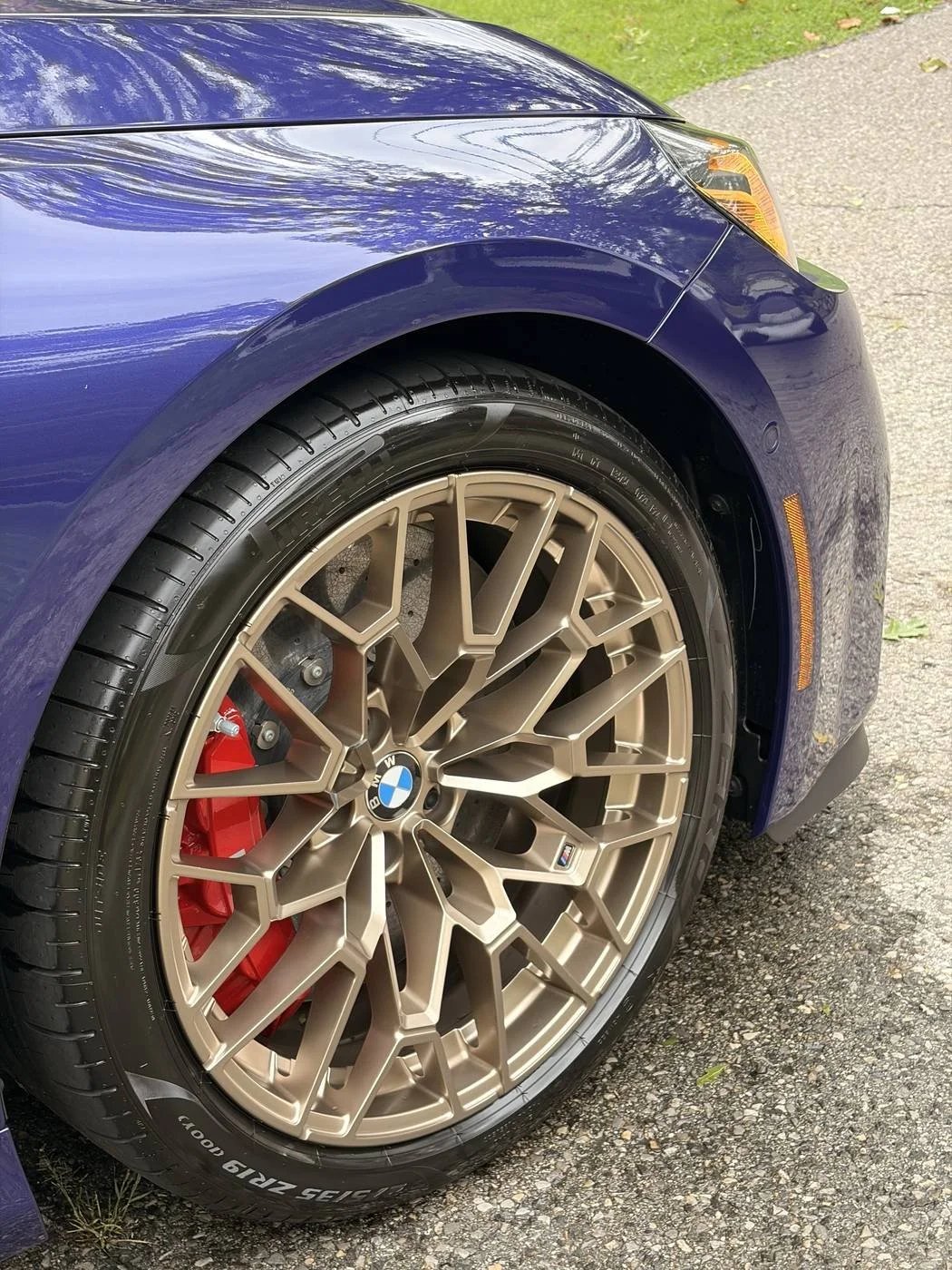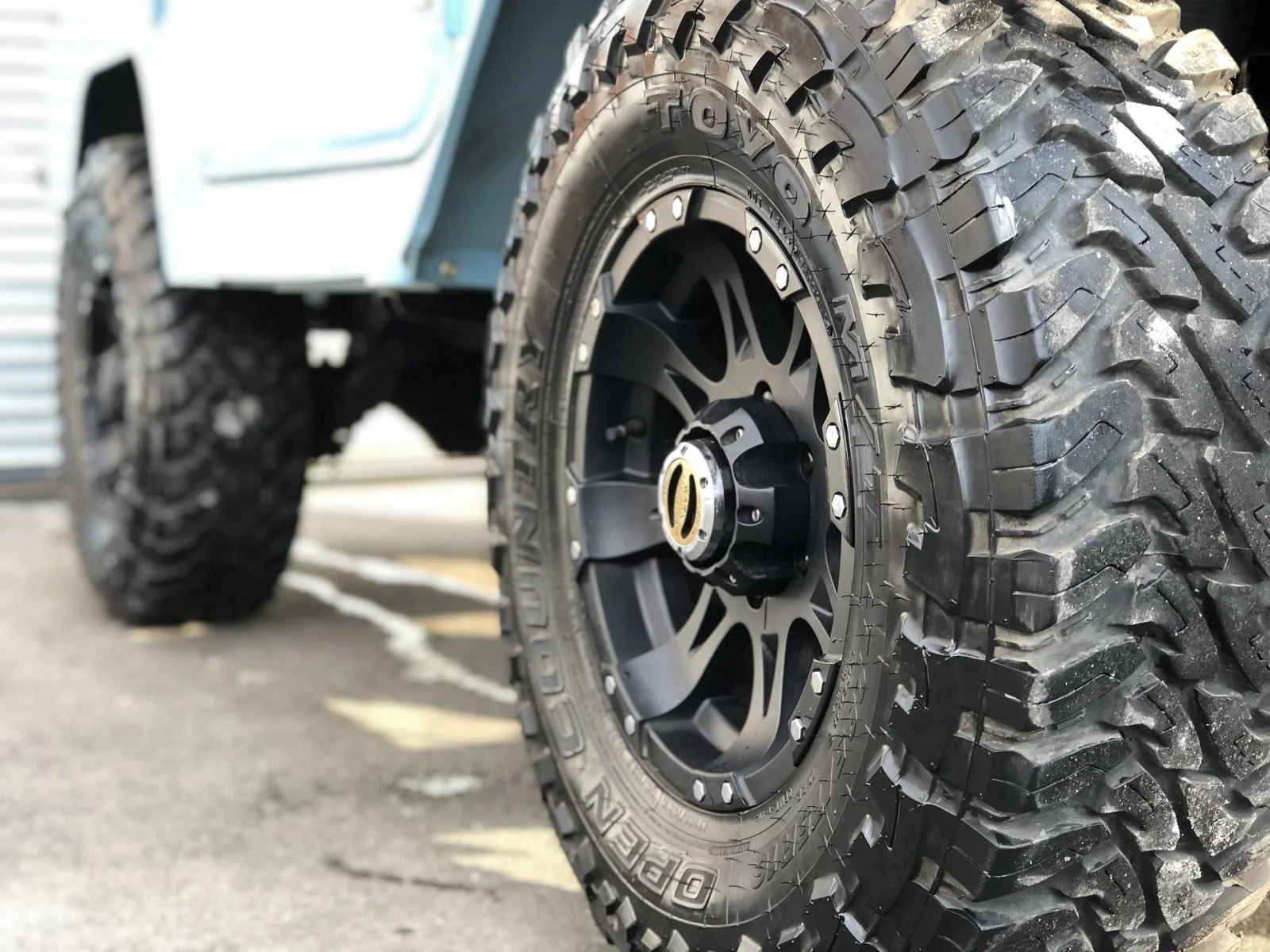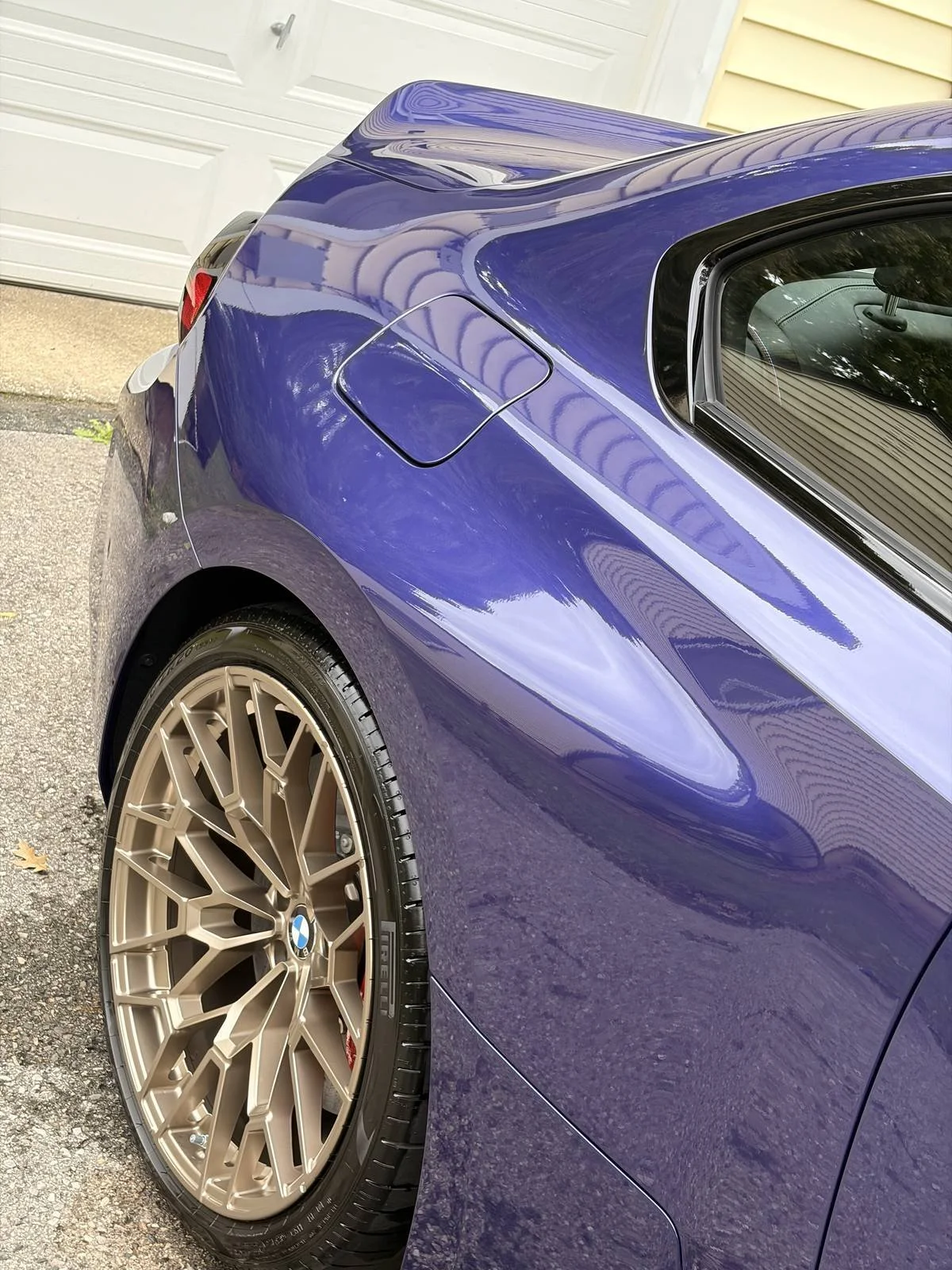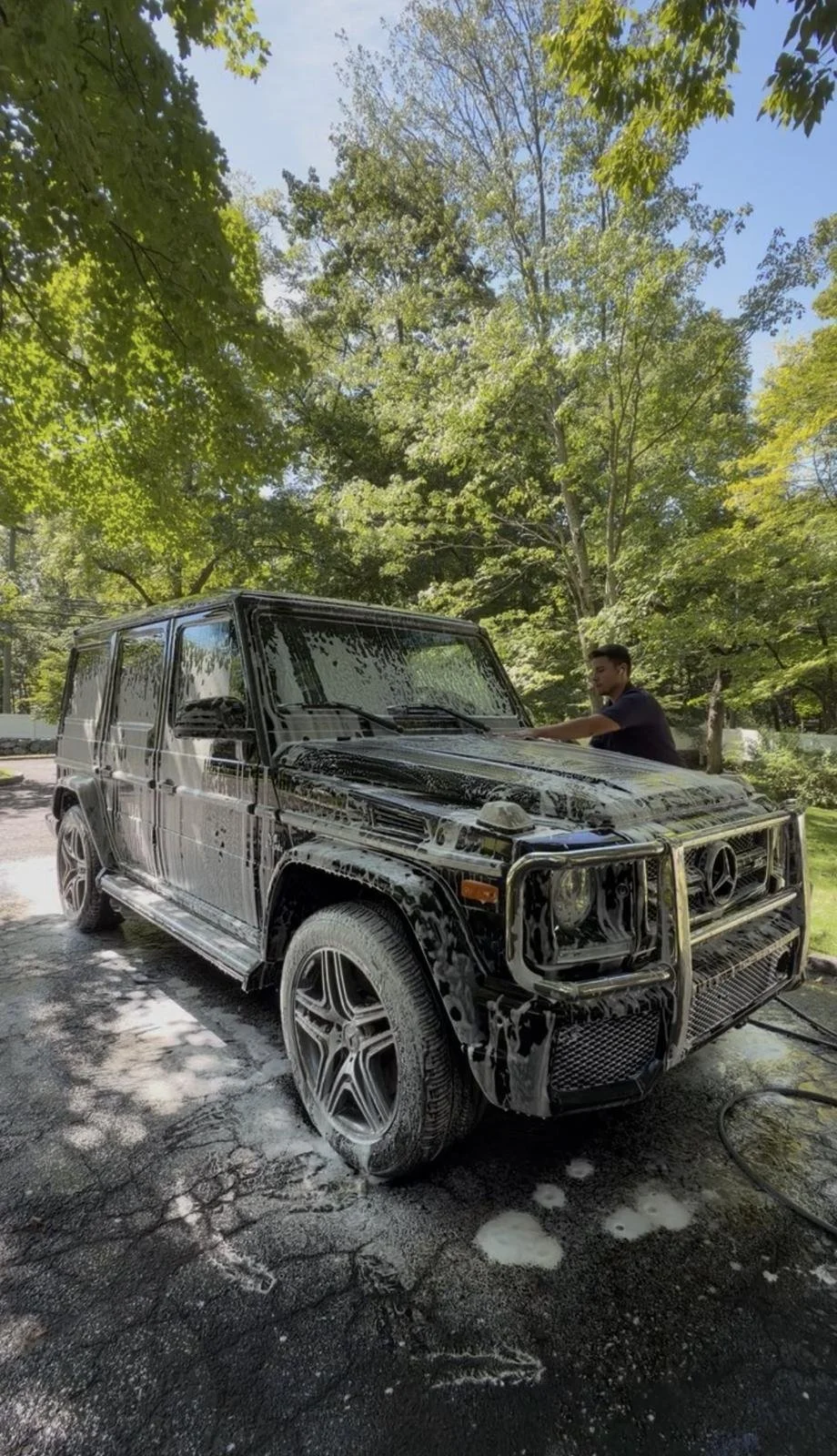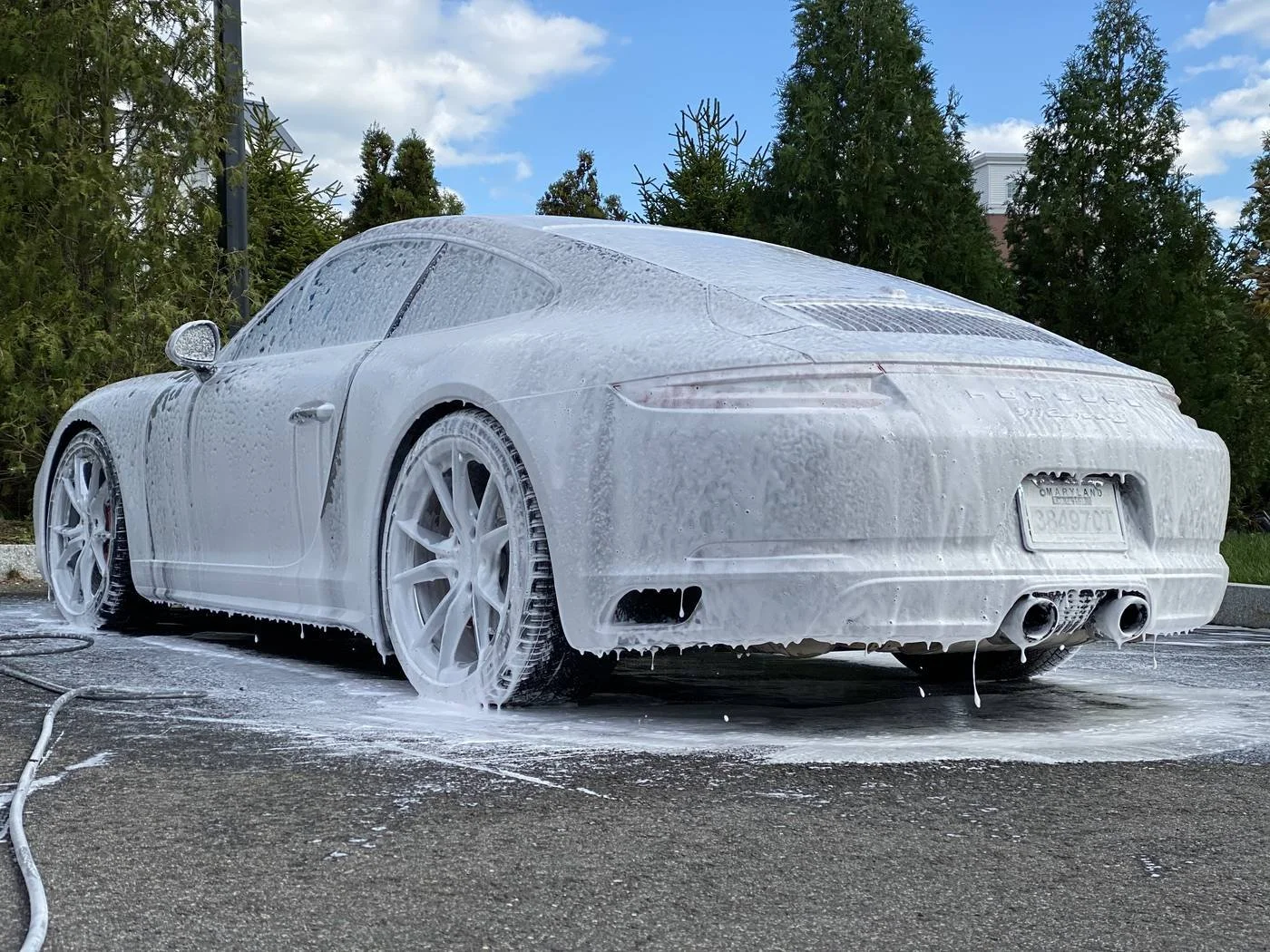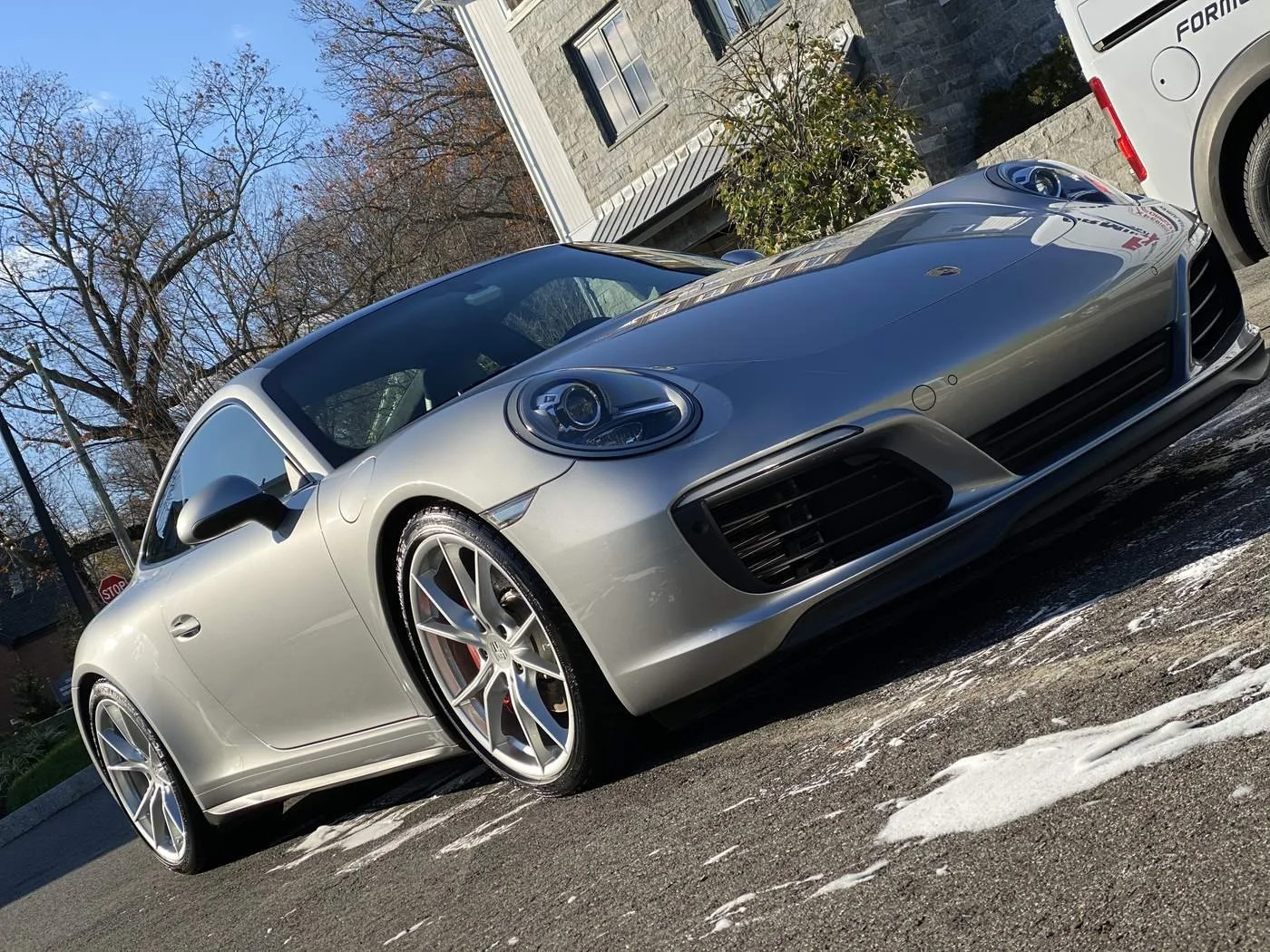
Formula X Mobile Auto Detailing & Ceramic Coating · Wheels, Tires and Brake Dust
Wheels are the dirtiest part of a car and the hardest part to clean well. Brake dust bakes onto the faces, packs into the barrels behind the spokes, and collects around lug nuts where a quick spray never reaches. Tires turn brown from old dressing and road film. And whatever comes off the wheels can scratch paint if the same mitt touches both. A mobile exterior detail in Stamford handles this as its own stage, before the paint is washed, with separate brushes, buckets, and towels. This guide explains what brake dust is, why wheel finishes need different cleaners, the order the work happens in, how tire shine should go on, and what a wheel cleaning can’t fix, like curb rash or worn tread. It also covers which Formula X packages include tire shine and how to check the wheels when the job is done. Formula X Mobile Auto Detailing & Ceramic Coating is based at 48 Union St, Stamford, CT 06906, and can be reached at (203) 945-9454.
How does mobile car exterior detailing in Stamford clean wheels, tires, and brake dust?
On a Formula X Mobile Auto Detailing & Ceramic Coating exterior detail in Stamford, wheels and tires come first, while they’re cool, with brushes, buckets, and towels that never touch the paint. Each wheel gets a cleaner suited to its finish on the face and inner barrel, the spokes and lug nuts are brushed, the tire sidewall is scrubbed, and tire shine goes on at the end.
Gold ($495+), Silver ($395+), and Bronze Exterior ($295+) all list tire shine. Curb rash, bent wheels, and worn tires need a wheel or tire shop.
For the whole exterior process in order, read mobile car exterior detailing step by step. For what each package covers outside, see what’s included in a mobile exterior detailing service. For the service page, see exterior detailing in Stamford, CT.
Where the details come from: Package contents and prices come from Formula X’s published package cards. Brake-pad materials and runoff come from the EPA Copper-Free Brake Initiative. Tire tread and inspection guidance comes from NHTSA’s TireWise pages. The cleaning method is general professional detailing practice. Your wheel and vehicle maker’s care instructions come first, especially for special finishes.
Why Wheels Are Cleaned First, With Their Own Tools
Quick answer: Wheels hold the heaviest grime on the car: brake dust, road film, and grit. Cleaning them first means anything that splashes onto the lower doors gets washed off later instead of landing on paint that was just cleaned. Separate tools keep metal particles from ever reaching the paint.
Order is the first rule. If the paint were washed first and the wheels second, every scrub of a spoke would spray brown water across clean doors and rocker panels. Doing the wheels at the start lets that splatter happen when it doesn’t matter.
Separation is the second. A brush or mitt that has been inside a wheel barrel holds brake dust, which contains hard metal particles. Used on the paint even once, it can leave fine scratches that take polishing to remove. Wheel tools stay with the wheels, and they get their own bucket of water.
The step-by-step exterior guide shows where this stage sits in the full sequence. This guide stays on the wheels, the tires, and the brake dust itself.
| Rule | Why it matters |
|---|---|
| Wheels before paint | Splash from the wheels lands on panels that haven’t been washed yet |
| Separate brushes and mitts | Brake dust particles never reach the clear coat |
| A separate bucket | Wheel grime doesn’t go back into the paint wash water |
| Cool wheels only | Cleaners don’t dry on hot metal and leave stains |
How This Guide Fits With the Step-by-Step and Exterior Checklist
Quick answer: The step-by-step guide gives the whole exterior in order, and the exterior checklist covers what each package includes. Both give wheels one step. This guide goes deeper on that one step: what brake dust is, how finishes change the method, and what cleaning can’t fix.
If you want the full exterior process, read the step-by-step guide. If you want the package checklist, read what’s included in a mobile exterior detail. If you’re deciding between a detail and a tunnel wash, mobile exterior detailing vs. automatic car washes explains why wheels are one of the clearest gaps.
Stay here for the wheel-specific questions: why some wheels stay dirty after a wash, which cleaners suit which finishes, why tires go brown, and how to tell a stain from damage.
What Brake Dust Is, and Why It Sticks
Quick answer: Brake dust is what wears off the pads and rotors every time you brake: friction material, metal particles, and binders, mixed with road grime. Heat from braking bakes it onto the wheel, which is why it doesn’t rinse off the way road dirt does.
Front wheels usually get dirtier than rear ones, because the front brakes do most of the stopping. Cars with large performance brakes or aggressive pads can dust heavily, and light-colored wheels show it within days.
Pad materials have been changing. Under the EPA Copper-Free Brake Initiative, EPA, states, and the auto industry agreed in 2015 to cut copper in brake pads to under 5 percent by weight in 2021 and 0.5 percent by 2025, along with reducing mercury, lead, cadmium, asbestiform fibers, and chromium-six salts. The reason was runoff: those materials wash off roads into streams, rivers, and lakes, where copper can affect fish, amphibians, invertebrates, and plants.
That’s a useful reminder for washing at home, too. Wheel rinse water is the dirtiest water on the car. Parking where runoff can reach grass or gravel, and away from a storm drain, is the better choice.
Left on long enough, baked brake dust can stain some wheel finishes. Regular cleaning keeps it at the stage where a wheel-safe cleaner and a soft brush remove it.
| What builds up | Where it collects | What usually removes it |
|---|---|---|
| Fresh brake dust | Wheel faces, especially fronts | Wheel-safe cleaner and a soft brush |
| Baked-on dust | Inner barrel, behind spokes, around lug nuts | Dwell time, barrel brushes, repeat passes |
| Road film and salt | Lower wheel, tire sidewall | Rinse, cleaner, agitation |
| Old tire dressing | Tire sidewall | Tire scrub until the foam runs clean |
Wheel Finishes Change the Method
Quick answer: Not every wheel can take the same cleaner. Most modern alloy wheels are painted and clear-coated, but polished bare aluminum, chrome, matte or satin finishes, and machined faces each have their own risks. The safe approach is the gentlest cleaner that works, tested where it won’t show.
Painted and clear-coated alloys behave a lot like body paint. They tolerate a pH-balanced wheel cleaner and soft brushes well. Harsh acid cleaners can etch or haze some finishes, and they’re a poor choice on a car you care about.
Polished bare aluminum has no clear coat, so it can stain or dull from strong chemicals. Chrome looks tough but can pit where the plating is thin or damaged. Matte and satin finishes shouldn’t be polished or given a glossy dressing, because that changes the look.
Machined or diamond-cut faces often have a thin clear coat over bright metal. If that coat is already lifting at the edges, water and cleaners can creep under it. A detailer can clean around it carefully, but can’t fix it.
If you know your wheel finish, mention it when you book. If you don’t, say the make and model, and send a photo.
| Wheel finish | Main risk | Usual approach |
|---|---|---|
| Painted, clear-coated alloy | Few, if cleaners stay mild | pH-balanced wheel cleaner, soft brushes |
| Polished bare aluminum | Staining and dulling from strong chemicals | Gentle cleaner, test spot, quick rinse |
| Chrome | Pitting where plating is damaged | Mild cleaner, soft tools, dry fully |
| Matte or satin | Turning shiny or blotchy | No polish, no glossy dressing |
| Machined or diamond-cut face | Clear coat lifting at edges | Gentle cleaning; damage noted, not hidden |
The Wheel and Tire Sequence, Step by Step
Quick answer: One wheel at a time: check that it’s cool, rinse, apply a cleaner suited to the finish, let it dwell briefly, agitate the face, barrel, lug nuts, and tire, rinse the wheel, and move on before anything dries.
Working one wheel at a time matters on a sunny day, because cleaner left to dry on a wheel can spot or stain it. Rinsing well before moving to the next corner keeps chemistry where it belongs.
The pressure washer in Formula X’s van helps here. A strong rinse knocks loose grit off before any brush touches the wheel, which means less scrubbing and less risk of dragging grit across the finish.
Wheels stay on the car. Taking them off is mechanical work, which Formula X doesn’t do. The barrel is reached through the spokes with long, soft brushes instead.
- Check that the wheels and brakes are cool to the touch
- Rinse the wheel and tire to knock off loose grit
- Apply a wheel cleaner suited to the finish, face and barrel
- Agitate the barrel, spokes, face, and lug nuts with dedicated brushes
- Scrub the tire sidewall until the brown film is gone
- Rinse the wheel and tire thoroughly
- Move to the next wheel before anything dries
- Dry the wheels later with wheel-only towels, then dress the tires at the end
Barrels, Lug Nuts, and the Spaces Between Spokes
Quick answer: The inner barrel is where a wheel looks clean from ten feet away and dirty up close. Brake dust packs in behind the spokes, around the lug nuts, and on the visible face of the brake caliper, and only long brushes and patience get it out.
Open-spoke designs show the barrel, so a dirty barrel is obvious. Multi-spoke and mesh wheels have dozens of narrow gaps, which take much longer than a five-spoke design. That’s one reason heavily soiled wheels add time.
Lug nut recesses collect grime in a ring. A small detailing brush works around each one. Wheel locks and center caps get the same care.
Painted brake calipers that show through the spokes can be wiped where they’re visible. That’s cosmetic cleaning only. Anything to do with brake function, pads, or rotors belongs with a mechanic.
Tunnel washes often miss the barrel, which then flicks grit onto clean paint on the first drive. The automatic car wash comparison explains that gap.
Tires: Scrubbing the Sidewall Before Any Shine
Quick answer: Tires turn brown from a mix of old dressing, road film, and protective compounds that rubber pushes to the surface over time. Scrubbing the sidewall with a tire cleaner until the foam runs white removes that film. Dressing applied over a dirty tire looks blotchy and slings sooner.
Tire rubber contains protective waxes and compounds that slowly move to the surface. Mixed with road grime and leftover dressing, they leave the brownish cast that makes clean wheels look tired.
A stiff tire brush and a cleaner meant for rubber lift it. The first passes often foam brown. When the foam comes off light, the sidewall is clean and ready for dressing later.
Raised white letters and outlined lettering get a little extra scrubbing so they read clearly. The tread itself is rinsed, not dressed.
- Brown foam means old dressing and film are still coming off
- A clean sidewall takes dressing evenly and holds it longer
- White lettering gets extra scrubbing
- The tread is rinsed, never dressed
Tire Shine Without Sling or Slippery Tread
Quick answer: Tire shine goes on a clean, dry sidewall, applied with an applicator, not sprayed at the wheel. It stays off the tread and off the wheel face. Excess is wiped off so it doesn’t sling onto the paint on the first drive.
Gold, Silver, and Bronze Exterior all list tire shine. Silver’s card also lists dressed trim and tires. The finish should look even and dark, not wet and greasy.
Sling is the most common complaint about tire dressing: little dots of product flung onto the lower doors and fenders as the tire spins. It comes from too much product or dressing applied to a wet tire. Applying a thin coat and letting it set before driving prevents most of it.
Dressing on the tread is a safety mistake, because it can reduce grip until it wears off. A careful detailer keeps it on the sidewall.
If you prefer a satin look over gloss, say so. It’s a matter of product and amount.
Iron Fallout and Clay Near the Wheels
Quick answer: Brake dust doesn’t stay on the wheels. Fine particles land on the lower doors, rocker panels, and rear bumper, and some bond to the paint. A clay bar, listed on the Gold and Bronze Exterior cards, lifts bonded particles that washing leaves behind.
Run your fingertips over the lower rear door after a wash. If it feels gritty, that’s bonded contamination: brake dust, rail dust, and other fallout stuck to the clear coat. Washing won’t remove it.
Clay works by grabbing those particles as it glides over a lubricated surface. Gold and Bronze Exterior include a clay bar, followed by a ceramic sealer that helps the paint shed grime. Silver doesn’t list a clay bar.
Some detailers also use iron removers, which react with embedded iron particles and turn purple as they work. If heavy fallout is a concern on your car, ask what the visit will include.
| Package | Clay bar on the card? | Protection on the card |
|---|---|---|
| Gold ($495+) | Yes | Ceramic sealer (about 6 months) |
| Bronze Exterior ($295+) | Yes | Ceramic sealer (6 months) |
| Silver ($395+) | No | 6+ month wax |
| Bronze Interior ($295+) | Inside only | None outside |
EVs, Hybrids, and Performance Brakes
Quick answer: Electric cars and hybrids use regenerative braking, so the friction brakes often do less work and wheels may dust less. Performance cars can go the other way, with large brakes and pads that dust heavily. Either way, the cleaning method follows the wheel finish.
Lower dust on an EV doesn’t mean clean wheels. Road film, salt, and grime still build up, and EVs are heavy cars that can wear tires and leave sidewalls grimy.
Big performance calipers fill the space behind the spokes, which makes the barrel harder to reach. Special brake systems and wheel finishes should follow the maker’s care instructions. If your car has a specific finish or brake package, mention it.
For coating and care on electric vehicles, see ceramic coating for Teslas and EVs.
Connecticut Salt, Slush, and Summer Dust on Wheels
Quick answer: Winter adds a white film of road salt and brine to the brake dust. Spring brings pollen and grime. Summer heat bakes brake dust on harder. Each season changes how much time the wheels take.
After a Connecticut winter, wheels often have salt rings on the faces and a crust in the barrels. Rinsing it off regularly matters more than any single detail. A spring exterior is a common time to reset the wheels.
In summer, wheels get hot from driving and sun. Cleaning hot wheels is a mistake, because cleaner dries on contact. That’s why the first step is checking that the wheels are cool.
For the seasonal plan, see the winter car care checklist and protecting your car from salt air on the CT coast.
| Season | What shows up on wheels | What to ask for |
|---|---|---|
| Winter | Salt rings, brine film, slush in barrels | A thorough barrel cleaning |
| Spring | Pollen, leftover salt, grime | Full wheel reset with the exterior |
| Summer | Baked-on brake dust, hot wheels | Early or shaded appointment |
| Fall | Wet leaves, road film | Regular washes before winter |
Coated Wheels and Ceramic-Coated Cars
Quick answer: A ceramic coating on the wheels makes brake dust easier to rinse off, but it doesn’t stop it from landing. Coated wheels still need gentle cleaners and separate tools, and harsh chemicals can shorten a coating’s life.
If your car or wheels are coated, say so when you book. The wash method is gentler, and some products are avoided. How to wash a ceramic-coated car covers the care routine.
Ceramic coating is a separate service from a package detail, and Formula X quotes it after inspection. The ceramic sealer on Gold and Bronze Exterior is a sealer rated around six months, not a coating. For the differences, see ceramic coating vs. wax vs. sealant.
Want Wheels That Look Clean Behind the Spokes?
Tell Formula X Mobile Auto Detailing & Ceramic Coating the vehicle, where it’s parked, and the wheel finish if you know it, with a close-up photo. You’ll hear whether Bronze Exterior, Silver, or Gold fits, what’s likely to come off, and what belongs with a wheel or tire shop.
What Wheel and Tire Cleaning Can’t Fix
Quick answer: Cleaning removes dirt and film. It doesn’t repair curb rash, peeling clear coat, corrosion under the finish, bent wheels, cracked sidewalls, or worn tread. Those belong with a wheel repair shop or a tire shop.
Curb rash is metal damage, not grime, and no cleaner takes it out. Peeling or bubbling clear coat on a wheel is a finish failure. Pitting in chrome is damage to the plating.
Clean wheels do make tire problems easier to see. NHTSA’s TireWise guidance says tires should be replaced when tread wears to 2/32 of an inch, describes the penny test, and lists cuts, cracks, and bulges as reasons to stop using a tire. If you notice any of those after a detail, take the car to a tire professional.
Formula X doesn’t do mechanical work, and that includes tires, brakes, and wheel repair.
Curb rash and gouges
Wheel repair shop.
Peeling or bubbling wheel clear coat
Wheel refinishing shop.
Bent or cracked wheels
Wheel or tire shop; a safety issue.
Cracked, bulging, or worn tires
Tire shop. NHTSA lists these as reasons to stop using a tire.
Brake noise or vibration
Mechanic. Detailing is cosmetic only.
Which Formula X Packages Cover Wheels and Tires
Quick answer: Gold ($495+), Silver ($395+), and Bronze Exterior ($295+) are the packages with exterior work, and all three list tire shine. Gold and Bronze Exterior add a clay bar and a ceramic sealer. Silver lists a 6+ month wax and dressed trim and tires. Bronze Interior is inside only.
The plus sign means size and condition can raise the price. Wheels with heavy, long-neglected buildup take longer, so a close-up photo helps you hear the price before the day. For how that works, see how much mobile car detailing costs in Fairfield County.
Scratches are extra. Ceramic coating and paint correction are quoted after inspection. Curb rash repair and tire work aren’t part of any package.
| Situation | Package to ask about |
|---|---|
| Wheels and paint gritty, interior fine | Bronze Exterior ($295+) |
| Whole car needs a deep reset | Gold ($495+) |
| Car in decent shape, wants a wash, wax, and light interior | Silver ($395+) |
| Wheels very neglected or caked | Your package; send a close-up photo so condition can be priced |
| Curb rash, bent wheels, worn tires | Wheel or tire shop |
Keeping Wheels Clean Between Details
Quick answer: Wash wheels when they’re cool, with their own bucket and brush, before the paint. Use a pH-balanced wheel cleaner instead of an acid one. Rinse often in winter. Never let the wheel brush touch the paint.
A cheap set of wheel-only tools prevents most home-washing damage. A soft face brush, a long barrel brush, and a small lug-nut brush cover nearly every design.
Rinse salt off wheels and lower panels often in winter, even if a full wash isn’t possible. Salt sitting in the barrels is what builds the crust that takes longest to remove later.
Skip tire dressing if you’re not sure how to apply it thinly. A clean, matte black tire looks better than a slung, greasy one.
- Separate bucket, brushes, and towels for wheels
- Cool wheels only; never clean right after a drive
- pH-balanced wheel cleaner rather than acid
- Frequent rinses in salt season
- Thin tire dressing on the sidewall only, if any
How to Check Wheels and Tires When the Job Is Done
Quick answer: Crouch down and look through the spokes at the inner barrel. Check around the lug nuts, the tire lettering, and the lower doors behind each wheel. The tires should look evenly dark, with no dressing on the tread and no sling on the paint.
Do it before the detailer leaves, in good light. A phone flashlight helps for the barrel.
If you see brake dust left behind the spokes on one wheel, mention it then. It’s much easier to fix on the spot than after a drive.
| Check | What good looks like |
|---|---|
| Inner barrel | No brown ring of brake dust behind the spokes |
| Lug nuts | Clean recesses, no grime ring |
| Tire sidewall | Even dark finish, lettering clean |
| Tread | Rinsed, no dressing |
| Lower doors behind wheels | No sling, no brown splatter |
What to Tell Formula X When You Book
Quick answer: Send the vehicle, the wheel finish if you know it, where the car is parked, and a close-up photo of the worst wheel. Mention coatings, curb rash, or anything that looks like damage. Same-day openings when available; call to check.
Call (203) 945-9454 or send a request. The van brings its own water and power, so you don’t need to set out a hose. Formula X works in Stamford neighborhoods such as Glenbrook, Springdale, Westover, and Ridgeway, as well as Darien, Noroton, Noroton Heights, New Canaan, and Norwalk.
You’ll hear which package fits, whether the wheels look like a cleaning job or a repair job, and what to expect from the brake dust.
Formula X Mobile Auto Detailing & Ceramic Coating
Formula X Mobile Auto Detailing & Ceramic Coating is a mobile detailing, paint correction, scratch repair, and ceramic coating service based at 48 Union St, Stamford, CT 06906. The team works in Stamford, including Glenbrook, Springdale, Westover, and Ridgeway, and in Darien (including Noroton and Noroton Heights), New Canaan, and Norwalk.
For wheels and tires, that means a separate set of tools, a cleaner matched to the finish, attention to the barrels and lug nuts, and a straight answer when something is damage instead of dirt.
Call (203) 945-9454, email formulaxautodetail@gmail.com, send a request through the contact page, or view Formula X Mobile Auto Detailing & Ceramic Coating on Google Maps. Address: 48 Union St, Stamford, CT 06906.
Frequently Asked Questions About Wheels, Tires and Brake Dust
How does a mobile exterior detail clean wheels and tires?
Wheels and tires are cleaned first, while they're cool, with tools that never touch the paint. Each wheel is rinsed, a cleaner suited to the finish goes on the face and barrel, brushes reach the spokes, barrel, and lug nuts, the tire sidewall is scrubbed, and everything is rinsed before moving on.
Why are wheels cleaned before the paint?
They're the dirtiest part of the car, and cleaning them splashes brake dust and grime. Doing them first means splatter lands on panels that haven't been washed yet.
What is brake dust?
It's what wears off the brake pads and rotors: friction material, metal particles, and binders mixed with road grime. Heat bakes it onto the wheel, which is why it doesn't simply rinse off.
Can brake dust damage my wheels?
Left on long enough, baked brake dust can stain some wheel finishes. Regular cleaning keeps it at the stage where a wheel-safe cleaner and a soft brush remove it.
Why do my tires look brown?
Old dressing, road film, and protective compounds that rubber pushes to the surface build up on the sidewall. Scrubbing with a tire cleaner until the foam runs light removes it.
Does tire shine go on the tread?
No. Dressing goes on the clean, dry sidewall only. On the tread it can reduce grip until it wears off, and excess product slings onto the paint.
Which Formula X packages include tire shine?
Gold ($495+), Silver ($395+), and Bronze Exterior ($295+) all list tire shine. Silver also lists dressed trim and tires. Bronze Interior is inside only.
Do you take the wheels off?
No. Wheels stay on the car, and the inner barrel is reached through the spokes with long, soft brushes. Removing wheels is mechanical work, which Formula X doesn't do.
Can you fix curb rash on my wheels?
No. Curb rash is metal damage, and it needs a wheel repair shop. Peeling wheel clear coat and bent wheels also belong with a wheel or tire shop.
Do EVs get less brake dust?
Often, because regenerative braking means the friction brakes do less work. EV wheels still collect road film and salt, so they still need cleaning.
Is it safe to use acid wheel cleaner at home?
It's a poor choice for most wheels. Harsh acids can etch or haze some finishes. A pH-balanced wheel cleaner, soft brushes, and cool wheels are the safer routine.
Can I get a mobile exterior detail today?
Same-day openings when available; call (203) 945-9454 to check. A close-up photo of the worst wheel helps.
Where is Formula X Mobile Auto Detailing & Ceramic Coating located?
Formula X Mobile Auto Detailing & Ceramic Coating is based at 48 Union St, Stamford, CT 06906, and can be reached at (203) 945-9454. It's a mobile service that comes to homes and offices in Stamford, Darien, New Canaan, and Norwalk.
Find Formula X Mobile Auto Detailing & Ceramic Coating
Formula X Mobile Auto Detailing & Ceramic Coating is a mobile service based at 48 Union St, Stamford, CT 06906. Use the map for directions to the business address, or call (203) 945-9454 to arrange service at your location.
View Formula X Mobile Auto Detailing & Ceramic Coating on Google Maps
Book a Mobile Exterior Detail for Your Wheels and Tires
Call Formula X Mobile Auto Detailing & Ceramic Coating at (203) 945-9454 or send a request with your vehicle, where it’s parked, the wheel finish if you know it, and a close-up photo of the worst wheel. You’ll hear which package fits and what’s likely to come off, and anything that needs a wheel or tire shop will be said plainly.
48 Union St, Stamford, CT 06906 · Serving Stamford, Glenbrook, Springdale, Westover, Ridgeway, Darien, Noroton, Noroton Heights, New Canaan, and Norwalk
Recent Formula X detailing work